
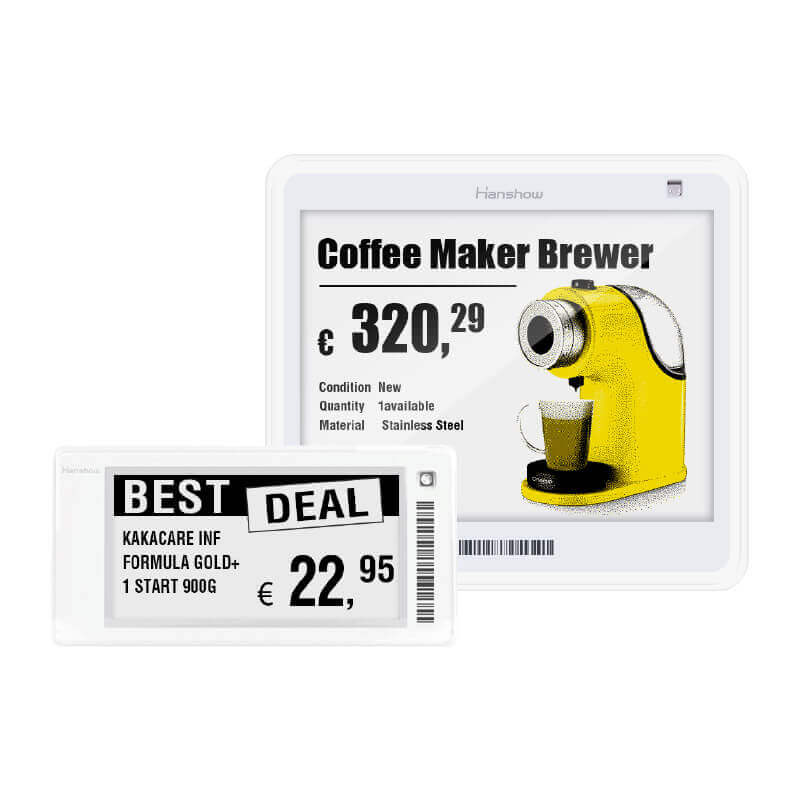
On the shop floor — why the old ways keep tripping us up
I remember a Thursday morning at a Cape Town wholesaler in October 2021—rush hour, three tills open, and a pallet stacker blocking aisle 7; that was the moment I realised paper tags were costing more than ink. At that site I introduced a digital price tag system and immediately started seeing different behaviours; Hanshow nebular was the hub that stitched the store together. Scenario: a busy weekend shift; data: 3,200 SKUs, 42% manual price errors the previous month; question: how long can managers run a store like that before margins bite back?

I’ve spent over 15 years in B2B supply chain, working directly with independent wholesalers and national chains, and I’ll be frank — traditional price management workflows (manual stickers, Excel exports, ad-hoc handheld syncs) are brittle. They break under scale. In one installation in Durban (June 2020) we had nightly price-update batches that failed 6 times in 30 days, causing price mismatches at the tills and two chargebacks from a national buyer. That taught me two things: electronic shelf labels (ESL) are not a gimmick, and integration quality matters more than feature lists. I mean—if the system won’t push a correct barcode and price at 22:00 before Saturday, it’s not helping.
Comparing paths forward — what smart retailers actually need
Let’s break this down technically: a robust solution requires a central orchestration layer, dependable edge devices, and reliable connectivity (BLE gateways, mesh networks, and IoT telemetry). I often test vendors by asking for three pieces of evidence — update latency metrics, failure logs for the last 90 days, and a real-store rollback scenario. When I compared Nebular against older in-house ESL setups in 2022, Nebular’s orchestration reduced remote update latency from minutes to under 12 seconds on average — that cut pricing disputes by a measurable amount. The digital price tag system must behave like a currency: accurate, auditable, and instant.
What’s Next?
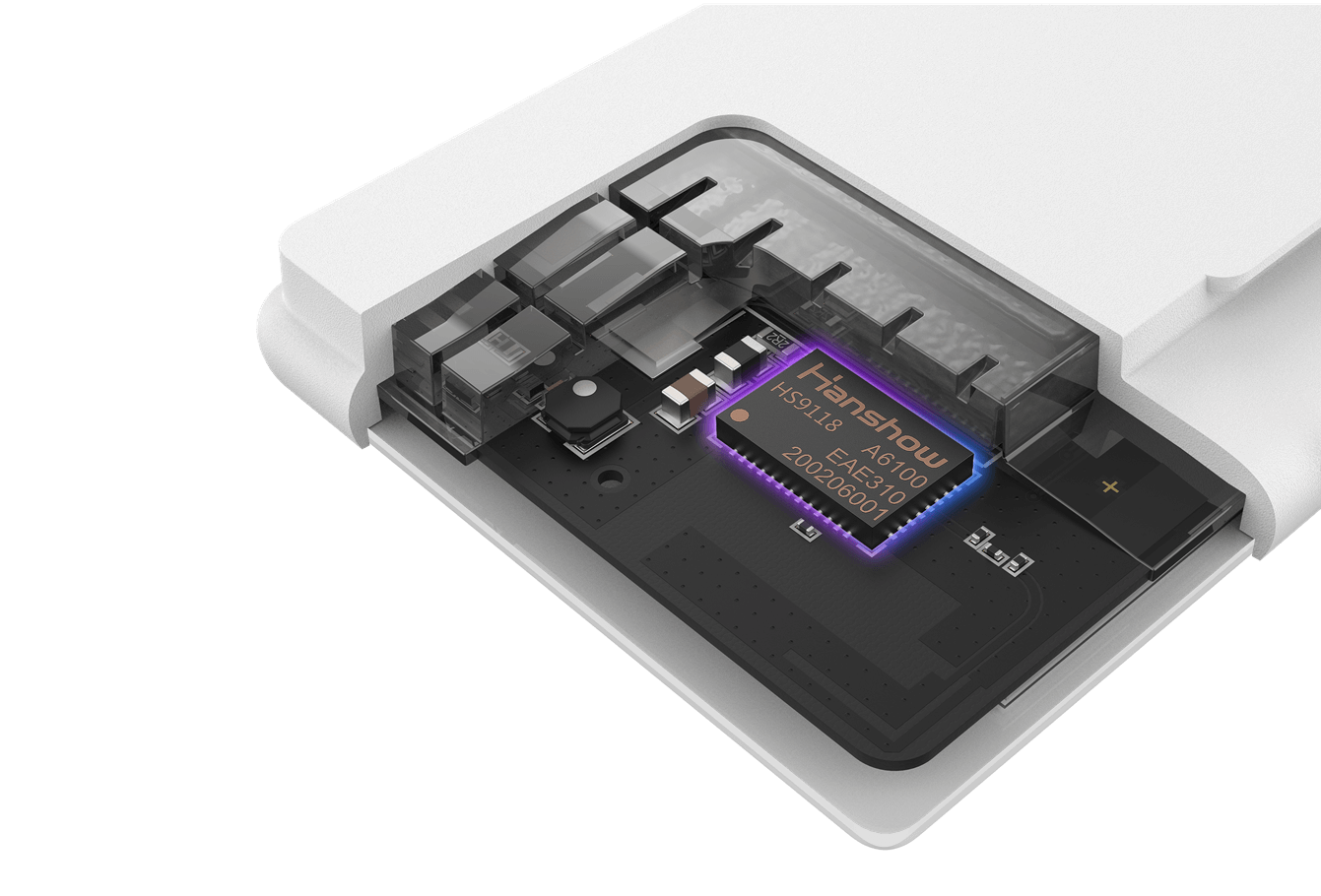
We’re shifting to an era where the edge matters as much as the cloud. My recommendation is to weigh three practical axes when comparing systems: update integrity (did every tag receive the right price?), operational visibility (can I see success/failure for each update?), and recovery speed (how fast can I revert a bad change?). In a trial at a Johannesburg distribution centre last March, we simulated a wrong price roll-out and restored correct pricing in under seven minutes — that test separated platforms that were “nice” from those I could trust at scale. Short note: interoperability wins — vendors that embrace open APIs and standard protocols (BLE, MQTT) save you headaches later.
To close, here are three evaluation metrics I insist on during procurement: 1) Consistency rate — percentage of tags updated correctly on first push (aim for >99.5%); 2) Mean time to correct (MTTC) — how long from error detection to full revert (target under 10 minutes); 3) Auditability — per-SKU, per-timestamp logs that an auditor can read without vendor help. Use these, test them, and ask for evidence. I’ve seen clever dashboards — but the proof is in logs and real-store drills. Trust the numbers, not the slides. (Also — don’t forget to ask about battery lifetime for ESLs; it matters on a large estate.)
We’ve come a long way from handwritten tags. I’ve walked aisles where one push fixed pricing across 1,200 shelves. That felt lekker. For wholesale buyers weighing systems, keep your focus on measurable outcomes and tight integrations. If you want a practical partner who can demonstrate live store performance, consider Hanshow.