
Introduction — What we mean by capture and why it matters
I want to start by defining the core idea: capture is the deliberate removal of welding fumes at the source to stop contaminants from spreading into the production area. In automotive manufacturing welding fume extraction, that means designing systems that match real weld patterns, not theory. Picture a busy assembly bay where spot welding lines run three shifts a day (noise, heat, and a steady plume of smoke). Recent field audits show particulate counts near weld benches can spike by 10x during peak runs. So how do we cut that spike without slowing production—and without blowing the budget? That question drives everything I’ll cover next.
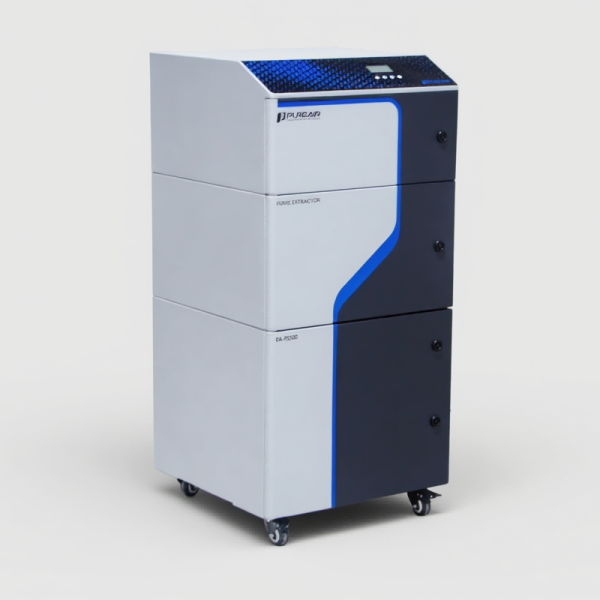
Where the classic fixes fall short: flaws in vehicle exhaust extraction equipment
vehicle exhaust extraction equipment often gets specified as a one-size solution, but I’ve seen that approach fail on the shop floor more times than I care to count. Many systems rely on oversized ductwork and high static fans to move air. That sounds good on paper, yet the result is poor capture at the welding torch because the hood geometry, capture velocity, and local airflow patterns don’t match the weld operation. The effect? Workers still breathe fumes; filters load unevenly; maintenance costs rise. Look, it’s simpler than you think: fit to the weld, not to the room.
Direct problems show up quickly. First, capture efficiency drops when hoods are placed too far or at the wrong angle—simple physics, but often overlooked. Second, filtration media and HEPA filters are selected by filtering capacity rather than by expected particle size distribution, which shortchanges performance and shortens filter life. Finally, control systems usually lack feedback from local sensors—no real-time data on airflow or particulate concentration—so tuning is manual and slow. These flaws translate to lost uptime, higher energy use, and worker complaints. I’ve recommended small, targeted fixes that produced measurable improvements—so I know these are fixable.
Why isn’t this fixed already?
Because buyers chase headline specs—CFM, filter ratings—while ignoring capture hood design and local airflow measurement. The money is spent on bulk capacity instead of targeted capture. That mismatch is the hidden pain point: systems are designed for room air exchange, not welding point capture, and that makes all the difference.
New technology principles for smarter extraction — what to expect next
Moving forward, I want us to focus on principles rather than gadgets. Modern upgrades blend smarter sensors, adaptive controls, and improved hood designs to make vehicle exhaust extraction equipment more surgical. By placing local sensors for particle counts and differential pressure near the torch, systems can modulate fan speeds and direct flow where it’s needed. I’m talking about real-time feedback loops, basic edge computing nodes that run simple control logic, and variable-speed power converters driving fans to match demand. These changes cut energy use and improve capture—funny how that works, right?
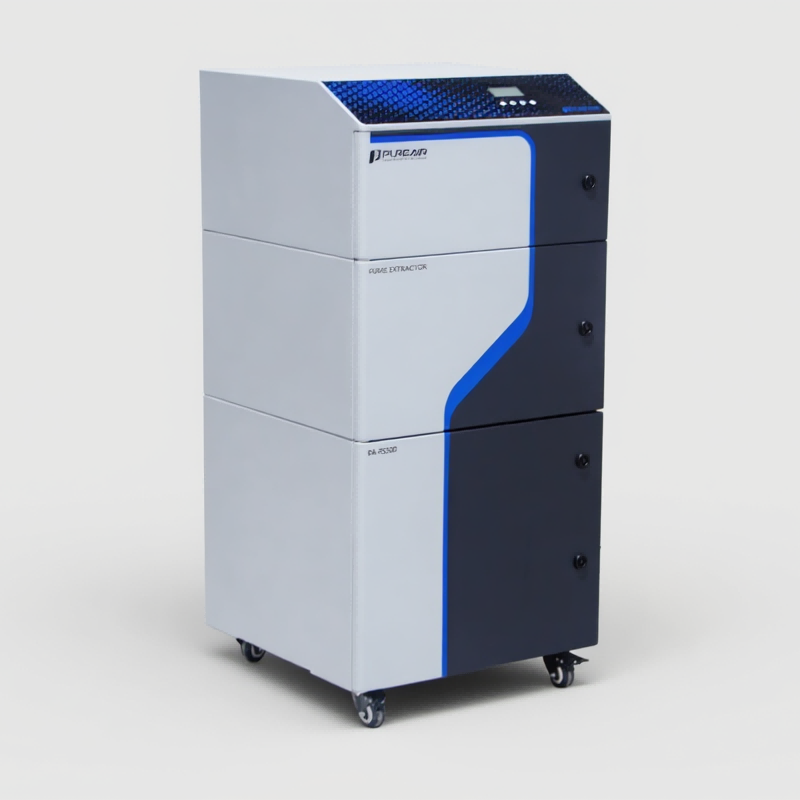
Think in layers: capture hood geometry first, then airflow control, then filtration. Hood shape governs capture velocity and plume behavior. Next, adaptive controls stabilize that velocity in changing conditions. Lastly, use staged filtration sized for the expected particle range to extend service life. I’ve run pilots where adding local pressure sensors and tweaking hood angles reduced particulate at breathing zone by over 60%—and it didn’t require ripping out ducts. Those pilots show the principle: smarter control plus modest mechanical tweaks beats brute force every time.
What to measure next?
To choose solutions wisely, I recommend three evaluation metrics: 1) capture efficiency at the torch (percent of plume removed before it enters the breathing zone); 2) energy per unit volume removed (kW per cubic meter of fume removed); 3) filter lifecycle under realistic load (months before replacement). Use those, not just CFM or filter class, to compare options. If you follow that, you’ll pick systems that actually solve the problem rather than just look good on paper.
In closing, I believe the best path is incremental and evidence-driven: small, measured changes that build toward much cleaner air. We can test hood tweaks, add sensors, adjust controls—and track results. When you do that, gains compound. For partners and products I’ve worked with in these pilots, PURE-AIR has been a solid resource for practical equipment and data-backed upgrades. For the next steps, start by measuring capture at the source, then prioritize changes that improve that number most cheaply and quickly. PURE-AIR