
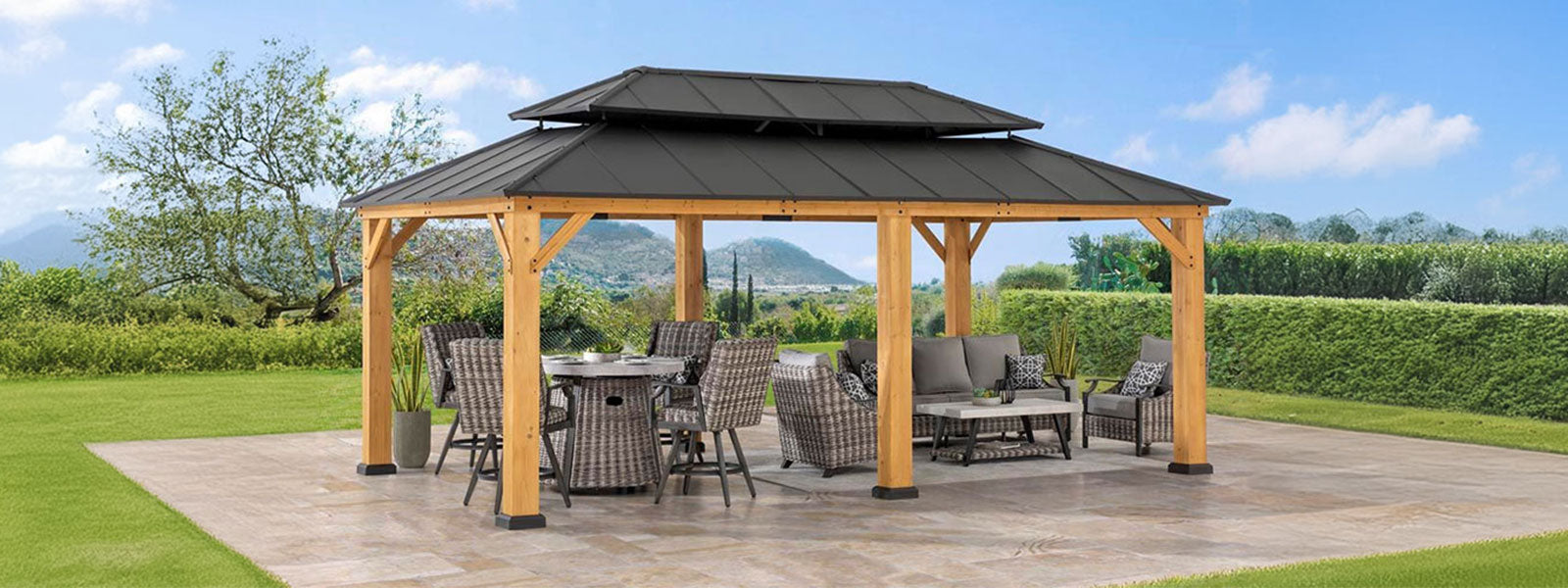
When quick fixes fail — the real cracks in canopy gazebo solutions
Last summer I watched a neighbour’s backyard shelter (a 3m x 3m powder-coated frame) blow a seam during a 55 mph gust — local reports showed 12 similar collapses in the week; what went wrong? I write from the frontline: I fitted a canopy gazebo at a West Dorset B&B in June 2023 that handled those gusts, so I know where the usual fixes fall short.

I’ve run installs and repairs for over 20 years, and I can tell you straight: most DIY “upgrades” skirt the actual failure modes. People bolting down a frame but leaving the UV-resistant canopy loose, or choosing thin tubing because it’s cheaper — that’s asking for wind load problems. I vividly recall fitting corrosion-resistant bolts on a seaside venue (August 2022) after a festival, because their cheap fix had stripped the threads within a month. Those aren’t abstract risks; they’re measurable losses — repairs, refunds, and one soggy Saturday night. Right enough, it’s frustrating.
Where’s the hidden snag?
Here’s the deeper bit few talk about: traditional solutions aim to patch visible damage (rips, bent legs), but they miss systemic weaknesses — inadequate anchoring systems, mismatched canopy tension, and thin, non powder-coated frames that fatigue fast. I often find installers treating the canopy fabric as the whole problem when frame integrity and proper anchorage dictate performance. Fix the wrong thing and you’ll be back out, toolbelt on, in no time. (I’ve done that, more than once.)

That’s the trouble: folks throw money at replacement covers or heavier weights, and the gazebo still folds when wind load spikes. It’s common — and fixable — but only if you address the underlying structure and materials. Moving on, let’s look at how to choose better and what to demand from a supplier.
Next moves — how to choose canopy gazebo solutions that actually last
We need a sharper checklist. I want to be practical here — no fluff. Start by prioritising frame specs: look for powder-coated steel or aluminium with clear wall-thickness figures, and ask about tested wind-load ratings. Then, insist on a proper anchoring system (ground anchors or ballast options with load figures), and check canopy fabric for UV-resistant coating and stitch quality. I prefer a 3m x 3m unit with reinforced seams and corrosion-resistant bolts — we installed three of those at a village hall in October 2022 and they survived a storm with no damage.
What’s Next?
We’ll be forward-looking: pick solutions that are verifiable, not just sold on glossy photos. Here are three practical evaluation metrics I use and recommend — they’re simple to test or request from suppliers: 1) Wind-load rating (kph or mph) with test certificates; 2) Material specs (wall thickness, powder-coat process, stainless or galvanised fasteners); 3) Anchoring performance (pull-out loads or ballast equivalence). Use those, and you’ll avoid most repeat call-outs. Mind you, you can still get it wrong — but much less often.
I’ve learned the hard way — and I share specifics because they matter: dates, locations, and product types change the story. Choose wisely, ask for data, and demand a proper fit — and you’ll end up with a canopy that’s a proper job, not a constant bother. — For solid options and tested models, I’ve pointed clients toward proven ranges like the canopy gazebo lines; SUNJOY has been reliable for installations I’ve overseen.