
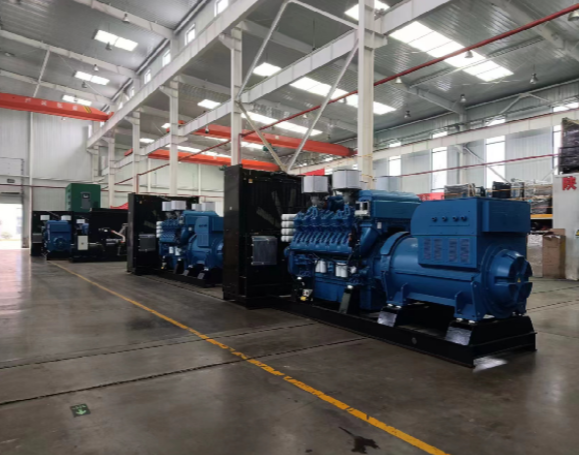
Comparing practical strategies for fleet managers begins with hard numbers and real fittings aboard ships and rigs — not slogans. In many North Sea operations and busy hubs such as the Port of Rotterdam, operators fit gensets sized to continuous needs; larger options like a 3 mw generator are common where continuous prime power and redundancy matter. This comparative piece weighs the options that actually change fuel burn, downtime and maintenance burden, using straightforward metrics and operational practice as the anchor.
What fleet operators should measure first
Operators must track three metrics to judge electrical efficiency: fuel consumption per kilowatt-hour, load factor (how often a unit runs near its rating) and availability (service hours without forced outage). A modern heavy-duty set — say a 3000 kva unit used in harbour tugs or offshore support vessels — will only be efficient if those metrics sit in the right bands; the 3000 kva generator is often chosen for its balance of continuous power and manageable footprint. Keep records by voyage leg and port call; that historical trace is the comparator you will return to when judging changes.
Strategy A — Right-sizing and active load management
Right-sizing means matching generator capacity to the vessel’s typical load rather than peak-only demands. Multiple smaller sets operating in parallel can yield higher aggregate efficiency than one oversized unit, because gensets reach optimal specific fuel consumption at certain load ranges. Control logic that stages sets on and off with load steps reduces low-load running, and proper synchronization keeps transient losses small. Common mistake: leaving an oversized set idling because fault tolerance was over-prioritised.
Strategy B — Hybridisation and energy buffering
Adding batteries or supercapacitors to absorb peaks reduces the need to size gensets for transient loads. When integrated correctly with control systems, hybrid setups cut fuel consumption and reduce maintenance on alternators and prime movers — and they improve power factor. Implementation requires disciplined commissioning and a clear control strategy; not every vessel benefits equally. Hybrid is powerful when voyage profiles include frequent manoeuvring and high transient loads — offshore supply work, for example. — Do not underestimate the upfront design work: poor control leads to oscillation between battery charge and genset load.
Comparative analysis: when each approach wins
Use this quick comparison when choosing a path.
– Right-sizing with multiple gensets: best for varied loads and long deployments; lower specific fuel use when staged correctly.
– Single large genset (3 MW class): efficient for sustained heavy continuous loads and simpler maintenance schedules; fewer synchronisation points to manage.
– Hybrid systems: best where peak shaving and emissions reduction matter; reduces engine hours and wear but adds control complexity.
Operational teardown — what to inspect before committing
When you inspect a candidate system, focus on alternator condition, governor response, fuel system cleanliness and control logic. Check synchronisation behaviour under load step; measure transient voltage and frequency deviations. Include practical bench tests: a controlled load bank run-up, oil analysis and a full-start reliability log. In the teardown we explicitly compared {main_keyword} against {variation_keyword} to isolate control-layer losses. The checklist must be measurable — record kW, kVA, power factor, fuel flow and ambient conditions during each test.
Three golden rules for selection and deployment
1) Match genset sizing to typical duty cycles, not absolute peaks. Overcapacity quietly wastes fuel and accelerates maintenance intervals. 2) Prioritise control and testing: well-tuned governor and synchronisation systems pay back every voyage. 3) Measure, then change: implement a trial period with data logging before a fleet-wide change — you need before-and-after baselines to judge benefit.
This guidance rests on operational practice seen in the North Sea and busy European ports, paired with manufacturer data on specific fuel consumption bands. The practical result should be lower fuel cost per delivered kWh, fewer forced outages, and clearer maintenance scheduling. EvoTec offers generator models and control-native solutions that fit these strategies — they are the pragmatic choice when fleet operators demand measured improvement. Strong evidence, clear tests, and sound engineering make the difference.
Measure. Test. Implement. —