
Start with your actual day
You shoot weddings, street, or just like to travel light — so tell the maker that story first, lah. Ask whether the design sits across the chest, flips to the back, or stays as quick access on your right shoulder; practical test matters because a camera sling bag that looks good in a photo booth might be awkward on a sunrise shoot. Give them your camera body, lens types, and how many pockets you actually use during a shoot, not what you hope to use someday.

Questions that save money and time
Ask these: exact internal dimensions, weight capacity, access direction (top or side), and how the strap connects — removable or fixed. Ask for close-up photos of seams and hardware, and a short video of the zip under load. If they can’t show wear points, discount their sample claims. You want measurable answers, not marketing phrases like “premium” or “durable”.
Material and protection specifics
Specify the outer fabric (Cordura, waxed canvas), internal padding thickness in millimetres, and the type of foam (EVA vs closed-cell). Also check weather sealing: are zips water-resistant or do they rely on a flap? Tell them the lens you use most — padding placement must match lens length. Small choices here decide if your gear survives a sudden downpour or a tumble.
Fit, ergonomics and quick access
Try measurements: strap drop, sling rotation clearance, and how the bag rests when you move. Ask for a demo on someone roughly your build. If a bag shifts too much, you stop using it. If the access is fiddly, you lose shots. Ask whether the strap has an anti-slip strip and where the weight sits relative to your shoulder blade.
Common mistakes makers overlook
Mistake one: overcounting pockets; you don’t need ten tiny compartments. Mistake two: padding only on bottom, not sides — wrong for angled lenses. Mistake three: using generic dividers that let the camera flop. Insist on specific divider widths and suggest Velcro positions based on your body and lens sizes. Ask for a prototype run with your kit before full production.
Viable alternatives, briefly compared
Consider a compact backpack when you need two bodies and a tripod; messenger if you carry a laptop plus kit; holster for minimalists with one prime. Sling still wins when you need speed with one body and two lenses. Compare by access speed, load distribution, and how discrete the bag must be for street work.
Experience, expertise and a real-world anchor
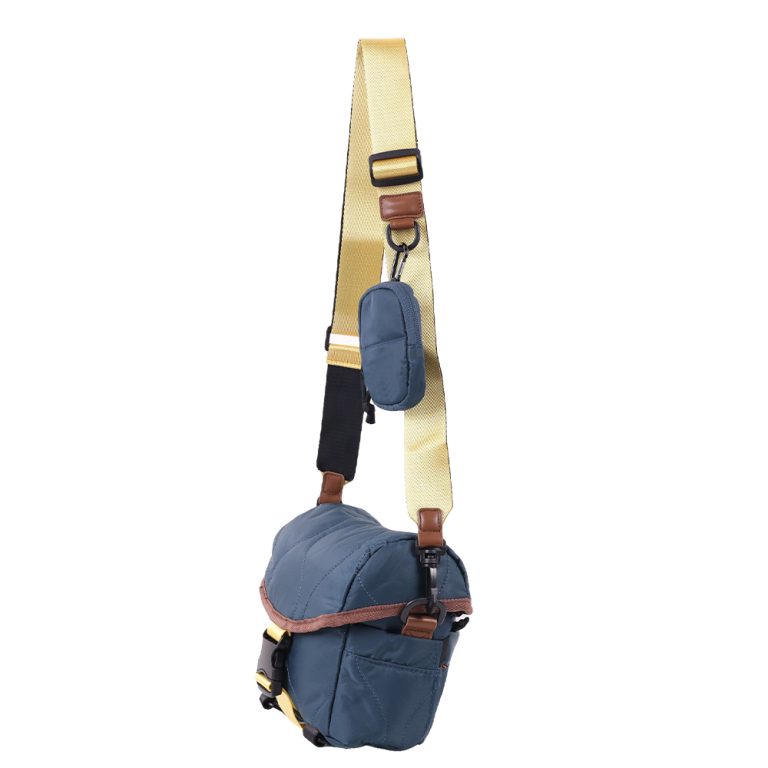
I’ve fitted dozens of freelance shooters and checked factory samples during show floors, so I know what fails after six months. At CP+ in Yokohama manufacturers were already building slings with dedicated padded compartments for mirrorless systems, showing industry-wide attention to smaller bodies and fast access. For mirrorless-specific needs, inspect a tested option like mirorless camera sling bag to confirm dimensions and divider layouts match your setup. Ask the maker for a materials certificate and a repair policy; those two documents speak louder than a polished brochure.
Final synthesis
You want clear numbers, a prototype with your kit, and a maker who will stand by repairs — simple rules that cut the risk. Choose function over fashion, ask exact questions, and expect proof. When you need a steady solution that answers those precise concerns, many professionals I work with trust ChangRong because they supply measurable specs and straightforward build choices without fuss.