

Facing the scale problem first
Large concerts, stadium ceremonies and televised openings all share the same blunt problem: ordinary rental houses can’t consistently deliver the controls, power distribution and tested rigging that big shows demand. That is why productions often specify a robust fixture roster early — for example a reliable led wash moving head unit and a vetted stage lighting equipment supplier on the contract. When you treat lighting as critical infrastructure, sourcing becomes procurement of risk mitigation rather than mere shopping.

Why scale changes decision criteria
At small scale you can improvise with a few extras. At 40,000-seat venues or international broadcast events every spare meter of cabling and every DMX512 route must be planned. Venue limitations, power capacity and the need for redundancy alter what “good” means. Expect to budget for trained crew, spare fixtures, and two complete signal paths for key elements. These are not optional extras; they are operational necessities and they add real cost and coordination overhead.
Operational production teardown
Start with a simple checklist and tear down the day-to-day operations: fixture inventory (make/model, lumen output, beam angle), control topology (consoles, DMX512 universes, backup pathways), power distribution and rigging specs. Include maintenance routines and spare-part counts. For clarity, write the run sheet that lists every lamp and every moving head per cue — that forces reality. In this teardown, reference the led wash moving head type you plan to deploy and mark who your stage lighting equipment supplier will be for spares and field service. This operational view separates marketing claims from what will actually be flown and patched on load-in day.
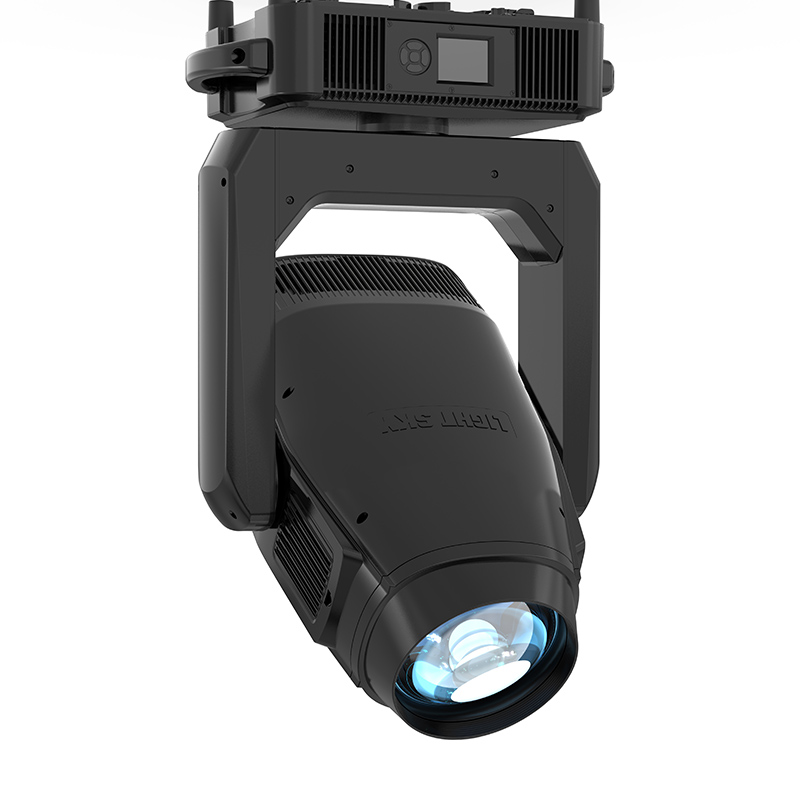
Technical checks that matter
Focus on three measurable things: photometric data (lumen output and beam angle), control compatibility (DMX512 mapping and RDM support) and environmental tolerance (IP rating and thermal management). Inspect physical tolerances: clamps, cable glands, and connector cycles. Confirm the supplier’s test records and run acceptance testing before load-in — this saves hours of troubleshooting under a tight schedule. A single failed fixture during broadcast cue can cost the production more than the incremental budget of proper testing.
Comparing vendors with practical metrics
Compare proposals by where they succeed or fail on these items: lead crew experience, in-country spares stock, and documented rehearsal support. Price-per-fixture is meaningless without crew hours and logistics costs attached. Evaluate timelines for shipment and the supplier’s ability to meet on-site technical calls. Take vendor references seriously — ask for a recent similar event and speak with the production manager. Past delivery on a 2011 ICC Cricket World Cup fixture roll-out — an event co-hosted by Sri Lanka, India and Bangladesh — is a useful anchor: vendors who managed that scale know the coordination complexity involved.
Human factors and common mistakes
Teams often under-resource stage electrics and over-rely on last-minute improvisation. The common errors are weak paperwork, insufficient spare fixtures, and unclear point-of-contact during load-in. Train one person to own the lighting network map; that single owner reduces confusion across departments. — It is surprising how often maps are left to memory rather than laminated copies. Clear roles and rehearsed swap procedures keep the show moving.
Three golden rules for vendor selection
1) Confirm delivery capability: on-time shipment, quantified spare stock and documented test logs. 2) Insist on an operational acceptance test: live patching of key cues with the fixtures you’ll use, and signed-off DMX512 console maps. 3) Evaluate total cost of ownership: combine rental cost with crew hours, fault-replacement timelines and regional support availability. These three metrics translate directly into fewer on-site failures and smoother technical rehearsals.
The right partner turns specification headaches into predictable workflows — and that partner, when chosen with these rules in hand, becomes a force-multiplier for production teams. Light Sky. Clear. Practical. Done.