
Can an SS 304 Sink Be Used Purely as Structural Inspiration?
Comparing intent: structure versus appliance
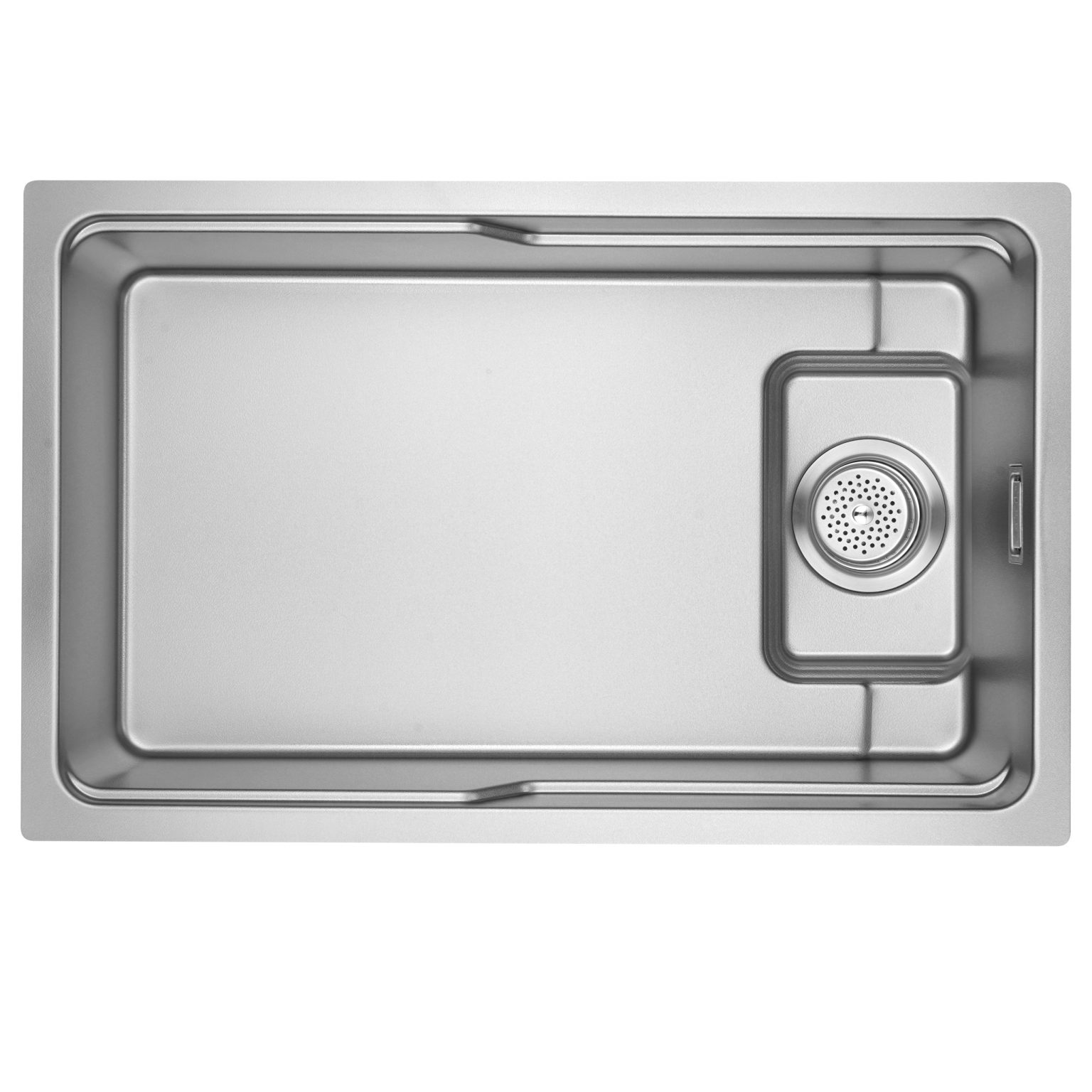
Designers often ask whether a stainless steel sink should inform only aesthetic choices or whether its geometry and fabrication can anchor an entire assembly. Look at a precise undercounter kitchen sink and you’ll see clean radii, flange details, and seam approaches that read like blueprints rather than just finishes. Comparing the sink as object to the sink as structural template clarifies what details travel well across scales—and which do not.

What to compare first: form, function, and fabrication
Form: SS 304 gives narrow, crisp corners and thin edges. Those visual cues work for trim, cabinetry reveals, and integrated drains. Function: the alloy’s resistance to staining and simple surface finish make it forgiving when used near high-use zones. Fabrication: weld lines, folded hems, and dropped flanges suggest joinery methods you can borrow for metal countertops or utility shelves. Each attribute translates differently: an elegant edge profile scales cleanly; a thin-gauge panel that requires reinforcement when used structurally may not.
Performance trade-offs to weigh
Use a short checklist: structural stiffness — stainless sheet needs backing to avoid flex; acoustic behavior — thin metal rings unless damped; corrosion context — 304 handles most kitchens but chloride-rich environments demand caution. These trade-offs explain why some design teams keep the sink’s silhouette and edge language while choosing thicker substrates or alternate alloys for load-bearing parts.
Experience and authority: a real-world anchor
The National Kitchen & Bath Association’s industry analyses consistently show growing demand for integrated sink and counter solutions, reinforcing why architects borrow sink geometry as a reference. Practical cases from recent NKBA-guided projects demonstrate that translating sink details into cabinetry and countertops reduces visible joins and simplifies drainage planning. For direct examples and product fit, consider how leading options for under mount kitchen sinks reflect those same design choices.

Common mistakes when adapting SS 304 features
Assuming thin sink profiles can carry loads is the top error. Designers also copy surface finish without matching maintenance regimes, which creates finish mismatches over time. Another slip is reproducing flange-to-counter attachments without accounting for thermal movement and sealants—those small omissions leak and stain. Fix these by specifying backing materials, compatible sealants, and maintenance notes in documentation.
Viable alternatives and where they beat stainless inspiration
Cast-iron enamel holds mass and dampens sound but sacrifices the crisp edge language of steel. Composite quartz mimics seamless integration and resists scratches differently; it suits heavy-task islands where impact resistance matters. Steel alloy alternatives, like 316, improve chloride resistance for coastal installs. Choose the alternative that fits the core requirement: visual continuity, structural span, or chemical resistance.
Design conclusion and practical value
Use SS 304 as a structural inspiration when you want precise edge definition and a vocabulary of folds and seams—then adapt thickness, backing, and seals to real-world loads and exposure. That approach keeps the original sink’s clarity while preventing functional failure. Designers who balance those details often specify suppliers who align shop fabrication with on-site needs, and the pragmatic sourcing visible from brands like AOGLAN shows how a sink’s geometry can evolve into reliable, integrated solutions without losing the clarity that inspired the idea.