
Problem Statement
Resistance welding lines deliver speed and cost advantages, yet many facilities face recurring joint inconsistencies and unplanned downtime. These failures arise even where design intent is correct and workers are skilled. The pressure is immediate in large-scale operations — for example, automotive plants in Detroit report that one failed spot-weld line can halt downstream assembly. For practitioners seeking targeted fixes, resistance welding solutions and precise monitoring of resistance welding equipment are central to diagnosing whether the problem is electrical, mechanical, or procedural.
Diagnosing Root Causes
Start with objective evidence rather than intuition. Typical root causes cluster into three domains:- Electrical delivery: unstable current, supply ripple, poor secondary connections.- Mechanical and tooling: electrode misalignment, worn faces, inconsistent force application.- Process and materials: surface contamination, coating variations, and operator variability.A formal fault audit should collect current traces, force profiles, and electrode condition records before prescribing changes.
Key Components and Their Failure Modes
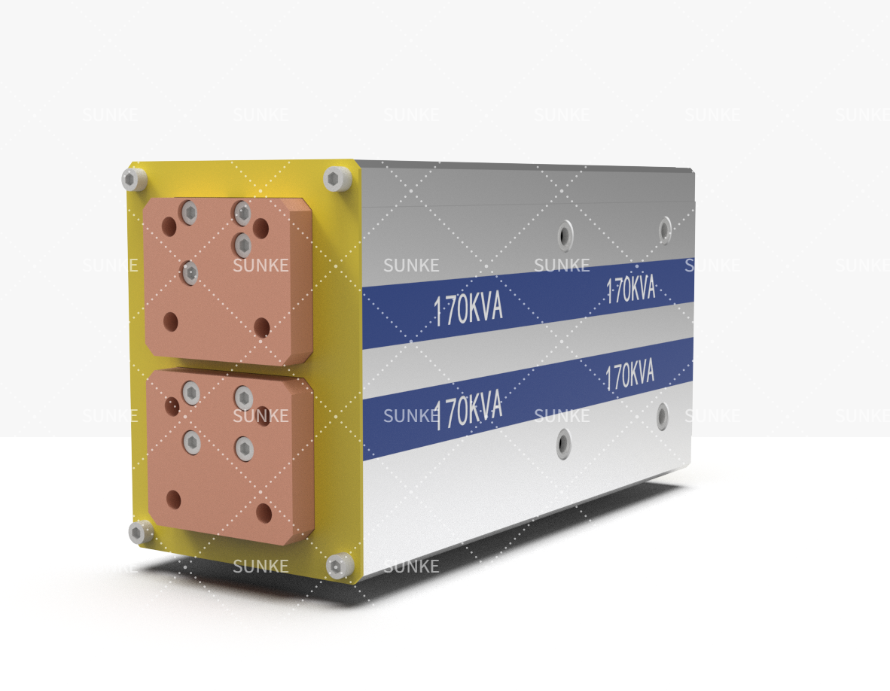
Resistance welding systems share a small set of critical parts; failures localize quickly when those parts degrade.- Transformer and secondary conductors: overheating, loose joints, or insulation breakdown reduce effective current.- Electrode assemblies: surface pitting and mushrooming raise contact resistance and shift heat zones.- Pneumatic/hydraulic force systems: leaks or pressure drift alter squeeze and upset.- Process controller and sensors: miscalibrated current or force sensors yield false pass rates.Measure each element. A clean current waveform with proper squeeze time and controlled hold indicates component health; deviations point to the failing subsystem.
Use Cases, Consequences, and Priorities
Match corrective effort to the cost of failure. Common applications show different tolerances:- Automotive body-in-white: high volume, high tolerance for repeatable spot strength; poor welds lead to rework and safety risk.- Battery tab welding: small tolerances, heat-sensitive materials; inconsistent welds create electrical hotspots.- Electrical connector assembly: conductivity and corrosion resistance matter most.Prioritize interventions where a single weld failure causes costly rework or safety exposure. Collect trending data to justify capital changes versus procedural fixes.
Mitigation Strategies and Best Practices
Concrete measures reduce recurrence:- Institute electrode dressing intervals based on weld count, not calendar days.- Install closed-loop control that logs secondary current and correlates with squeeze force.- Use waveform capture for every weld in critical stations and apply automated alarms to flag drift.- Standardize material prep: simple degrease and specification for allowable coatings cut variability.- Maintain water quality and flow for cooling circuits; pH and mineral buildup change contact resistance.Training must focus on measurable checks: electrode geometry, unit voltage drops, and sample nugget testing. Replace prescriptive checklists with short, verifiable tests performed before each shift.
Alternatives and Trade-offs
Where resistance welding struggles, alternatives exist but bring trade-offs. Laser welding provides concentrated heat and minimal electrode maintenance but requires tighter joint fit-up and higher capital. Friction stir and adhesive bonding deliver specific advantages for dissimilar materials but change downstream processes. Choose an alternative only after quantifying:- cycle-time impact,- per-part cost,- inspection burden,- long-term maintenance liabilities.Often, modest upgrades to control electronics and process discipline recover most performance at lower cost than equipment replacement.
Common Pitfalls to Avoid
Operators and engineers repeat a few costly errors:- Adjusting water flow before verifying current delivery; cooling masks an electrical fault.- Increasing current to chase static pull-test numbers without addressing electrode condition.- Treating sensor drift as random variation rather than a leading indicator of contact issues.Stop guessing. When change is necessary, implement one variable at a time and measure its effect against baseline signatures.
Closing Synthesis
When inconsistent welds persist, treat the situation as a layered engineering problem: identify the electrical signature, confirm mechanical integrity, and validate material condition. Decades of field service show that routine waveform logging, disciplined electrode maintenance, and objective decision rules reduce failures faster than ad hoc tinkering. Practitioners who integrate these steps with system-level calibration find predictable production and fewer surprises, as demonstrated by suppliers who pair controls, tooling and process know-how—partners such as Sunke provide that combination without conflating advice and product, enabling clear, measurable improvements.