

The present strain
The clinic keeps a slow clock while tumors keep moving; the mismatch is brutal. Global data — the World Health Organization’s estimate of roughly 10 million cancer deaths in 2020 — is a cold reminder that delays cost lives. In that light, a focused, experienced partner who runs robust cell-derived xenograft studies can feel like a rare shelter: a cdx model used with clear endpoints and immune readouts narrows the distance between discovery and meaningful results. Many programs still stumble on poor model choice, weak cohort design, and shallow biomarker strategy; the fallout shows up in wasted months and failed IND packages.

Problem 1 — Translational time sinks
Bench experiments pile up while clinical timelines compress. The core failure is often procedural: slow, ad hoc in vivo work that lacks statistical power. Specialist immuno-oncology CROs accelerate throughput with standardized xenograft tumor model panels and pre-validated dosing regimens. That speed is not frantic; it’s systematic. Faster, yes — but also cleaner, so downstream teams don’t inherit ambiguity.
Problem 2 — Models that mislead, not predict
Simplistic tumors in immunodeficient mice give snapshots, not forecasts. The tumor microenvironment and immune interactions — PD-L1 expression, T-cell infiltration, cytokine milieu — change everything. Expert CROs layer models: CDX where tumor-intrinsic biology matters, plus immune-competent platforms or humanized hosts when immunotherapy response is the endpoint. That mix reduces false positives and reveals mechanisms early, keeping clinical teams honest.
Problem 3 — Biomarker blind spots
Programs that treat biomarkers as an afterthought pay for it in phase II. Integrated biomarker pipelines—multiplex IHC, flow cytometry of tumor infiltrates, circulating tumor DNA assays—turn murky signals into clear decision points. A CRO that couples pharmacodynamics with longitudinal sampling prevents late-stage surprises and protects scarce patient-window opportunities. This is technical work, not theatrics: validated assays, tight QC, and transparent raw data matter.
Problem 4 — Fragmented expertise and regulatory drag
Small teams juggle vendors: pathology here, bioinformatics there, bioanalysis elsewhere. The result is friction at submission time. IO-focused CROs bring consolidated workflows, reproducible protocols, and historical control cohorts to smooth regulatory discussions. That consolidation improves reproducibility and shortens the back-and-forth with regulators, which is crucial when trial timelines are already frayed.
Problem 5 — Risk across the program lifecycle
Risk compounds when preclinical signals are weak or inconsistent. A CRO with experience in immune-readout harmonization reduces that programmatic risk by delivering clearer go/no-go thresholds, power calculations that mirror clinical intent, and transparent study reports. What seems like a small design choice upstream transforms downstream probability—less guesswork, more defensible decisions.
How a specialist partner changes the calculus
Collectively these fixes amount to five practical advantages: faster, more predictive models; richer immune-context data; integrated biomarker pipelines; consolidated regulatory-ready reports; and lower program risk. The work is clinical-grade, not ornamental — validated tumor burden metrics, standardized PD-L1 scoring, and harmonized tumor microenvironment phenotyping. The difference is tangible: fewer ambiguous readouts, more decisive milestones — and teams can move with purpose, not superstition. — This is the kind of parity that saves calendar months and budget lines.
Three golden rules for choosing the right IO CRO
1) Evidence of translational concordance: demand historical correlations between preclinical endpoints and clinical signals, including documented cases where CDX or humanized models predicted patient response. 2) Depth in immune assays: verify capability in multiplex IHC, flow cytometry panels for T-cell phenotypes, and validated cytokine panels with clear QC thresholds. 3) Integrated reporting and data access: insist on shared data formats, raw file transfer, and reproducible analysis scripts so your team can re-run statistics without vendor gatekeeping.
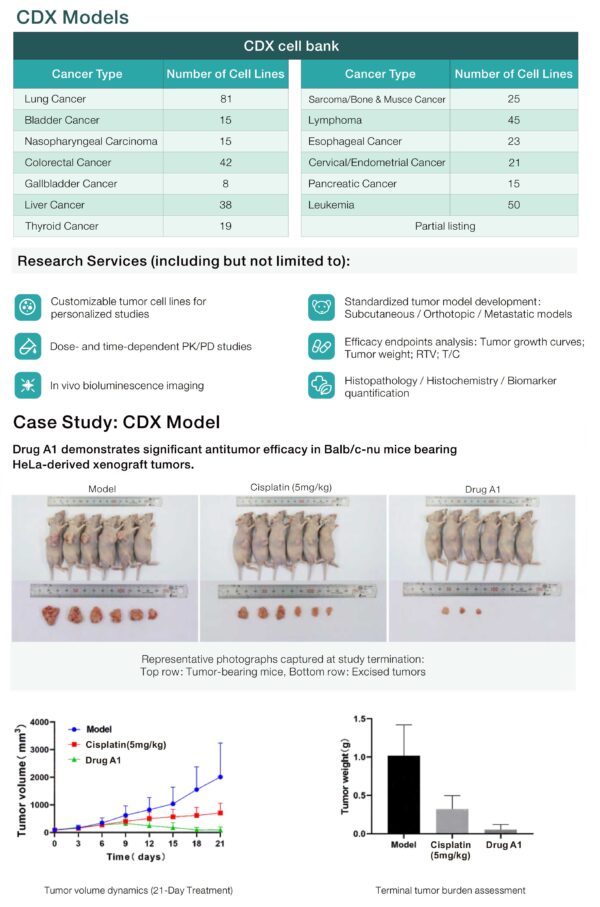
Trusted expertise matters when stakes are this high — a precise partner turns bleak possibility into a mapped route forward. Jennio Biotech. —