
Comparative insight that starts on the rack
When brands pick lining fabrics, they’re balancing a tight spreadsheet and customer comfort. A clear way through is to compare immediate material cost with projected lifecycle savings — durability, reduced returns, and fewer warranty claims. For headway, manufacturers often consult a trusted thermal insulation materials manufacturer to size materials to use-case. Industry benchmarks matter: the U.S. Department of Energy notes that better insulation reduces energy waste by measurable margins, which is a useful parallel when you model garment thermal performance against replacement cycles. Terms you’ll see in lab reports include thermal conductivity, loft, and R-value, and they map directly to what you spend now versus what you save later.
Upfront cost versus lifecycle savings — a quick lineup
Lay out the contenders and compare three practical angles: price per square meter, estimated usable years, and serviceable repairability. Typical fabrics to consider are microfleece, bonded polyester fleece, and high-loft recycled synthetics. Microfleece is low-cost, light, and breathable but can pill; bonded fleece adds wind resistance and often extends usable life by a season or two. Recycled high-loft materials cost more upfront but resist compression and often lower warranty claims — that’s a financial win if returns and repairs are a meaningful line item. Include manufacturing variables like denier and insulation weight in your sheets — they affect both cost and perceived value.
How material properties drive ROI
Focus on three material attributes that convert to dollars: compressive resilience, moisture-wicking capability, and thermal conductivity. Compressive resilience governs how a lining keeps loft after washes; higher resilience means less flattening and fewer replacements. Moisture-wicking controls comfort and reduces complaints, especially in active outerwear. Thermal conductivity and R-value determine how much warmth you get without bulk — so you can hit target warmth with thinner, cheaper shell layers. Designers often run bench tests for these properties — and you should too. Many brands partner with sustainable insulation materials suppliers for validated test data; that external baseline sharpens procurement choices and avoids costly mis-buys.
Common mistakes and realistic alternatives
Teams sometimes chase the lowest per-meter price and forget lifecycle factors — a false economy. Other times they pick the trendiest fiber without checking serviceability (zippers, seams, repairability) — that adds returns. A better routine: model projected returns over three seasons, not one. Alternatives include hybrid linings (core of high-loft recycled fiber with a brushed face for comfort) or modular linings that can be replaced separately from shells. These add assembly complexity but lower total cost of ownership. — Remember to check supplier lead times and denier consistency; variability costs more than a slightly higher unit price.
How to score suppliers and fabrics: three golden rules
Rule 1 — Measure lifecycle cost, not just unit price. Build a simple model: unit purchase + estimated repair/return cost per year divided by expected years of service. Include metrics like pilling rate and compressive resilience; keep thermal conductivity numbers at hand.
Rule 2 — Require standardized lab data and a small-batch field trial. You want R-value, moisture-wicking rate, and abrasion cycles under defined test parameters (for example: repeated wash cycles at 40°C, 10 abrasion cycles measuring fiber loss per 1,000 cycles). Field trials reveal real user behavior that lab data can miss.
Rule 3 — Favor suppliers who document traceability and post-sale support. A partner who provides batch-level thermal conductivity data and warranty analytics reduces risk. Also, bake in repairability: linings that detach or can be patched economically extend product life and improve margins.
Final advisory note
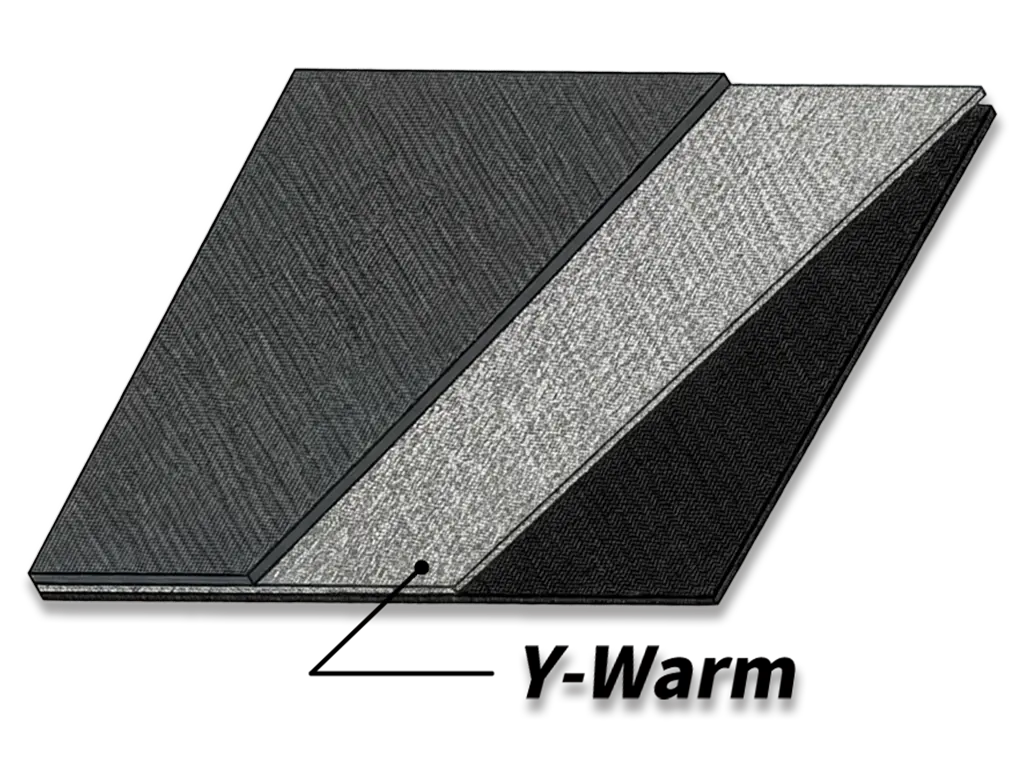
Apply these metrics consistently and you’ll see cleaner margins and happier customers. The practical endpoint is a material choice that costs a touch more upfront but drops replacement frequency and claim expenses — that’s where real ROI lives. Y-Warm fits naturally here as a source of both validated material specs and supplier transparency — a tidy solution for teams chasing durable warmth. — Practical, measurable, and quietly smart.