
Introduction: A Night Out, A Beam of Data
A warm night in CDMX, the plaza buzzing, and the skyline pulsing with color. The laser lights cut through the haze like clean chalk lines. Here’s a fun bit: venues that upgraded to modern rigs report up to 30–40% faster setup and fewer mid-show glitches, según datos from industry surveys. So why do some shows still lag, flicker, or go dark justo when the beat drops? And why does one festival look “wow” while another feels meh—same budget, same crowd? (Qué curioso.) The answer lives in the gap between old control workflows and new scanning hardware, between power delivery and optics, and between design intent and real-world execution. We’ll compare what’s changing and why it matters, sin rodeos. Next up, the hidden friction behind the glow.
The Hidden Friction Behind the Glow
Where do classic setups stumble?
A modern laser light show machine promises razor lines and tight timing, but certain pain points stick around. Legacy DMX512 chains add latency when you stack devices; long ILDA runs can pick up noise. Galvanometer scanners drift if they overheat, and tiny beam divergence errors show up as fuzzy shapes at 60 meters. Cheap power converters sag under load, causing color shifts and micro-stutters. Safety interlocks trip at the worst moment—funny how that works, right? Look, it’s simpler than you think: when control nodes, optics, and thermal management don’t sync, the audience sees it. Even great content looks off if scan speed collapses at wider angles or if cooling can’t keep the diodes at spec.
There’s more. Touring crews fight connector chaos and cable weight; every added adapter is another failure point. Edge computing nodes on the truss can help, but they rely on clean networking and proper grounding. Without auto-calibration, small rig shifts turn into big geometry errors. Project files optimized for 30 kpps at 8 degrees get wrecked at 40 kpps and 20 degrees. And when a storm rolls in, non-IP-rated housings gulp moisture—bye-bye crisp beams. In other words, flaws aren’t just “old gear” problems; they’re workflow problems. The best shows solve the stack: control protocol, optics, thermal, and safety—in that order, con calma y método.
Comparative Edge: Principles and Proof
What’s Next
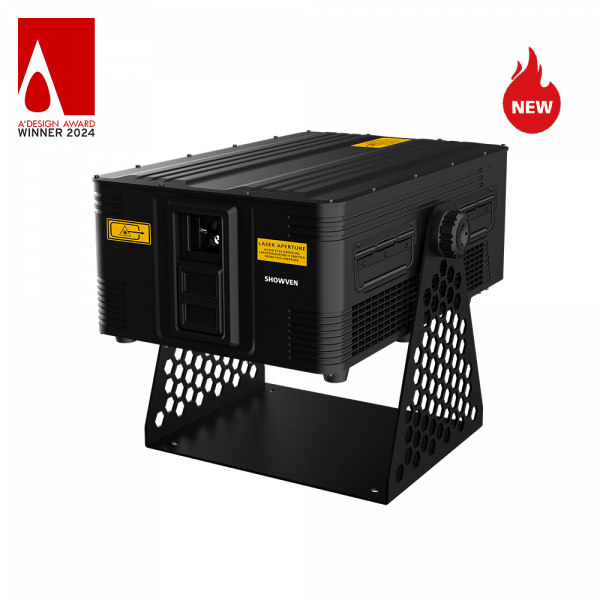
From here, the story turns forward-looking. New rigs pair DSP-controlled galvanometer scanners with smarter firmware and better cooling paths. A network-first design routes frames over Art-Net or sACN, then trims latency with edge computing nodes near the fixtures. Beam shaping optics and tighter RGB modulation keep colors aligned under load. Add auto-tune routines and camera-based feedback, and you get consistent geometry—even after a long travel day. The difference shows when you line up a legacy unit against a modern laser show projector in the same venue—same haze, same throw, different discipline. One holds scan speed at wide angles; the other jitters. One shrugs off voltage dips; the other thins out. Progress isn’t magic; it’s better engineering stacked cleanly—no drama.
Let’s close with practical selection advice, porque claro, choices matter. First, measure scan speed at usable angles: kpps means little unless you note degrees and dwell accuracy. Second, check beam divergence (mrad) over your longest throw; crisp vector art dies if the spot blooms mid-air. Third, audit reliability: safety interlocks, IP rating, power factor correction, and protocol support, plus redundancy. If a unit handles these three, your content breathes, and your operators sleep. The earlier sections showed how small gaps become big fails; the future is fewer gaps, smarter control, and steady optics—simple, but not easy. And yes—sometimes the quiet changes fix the loudest problems. For deeper dives and gear know-how, see Showven Laser.