
Setting the Stage: Choices That Decide the Night
You want every show to land. On time, on point, zero drama. An indoor laser lights supplier sits at the heart of that promise. Picture a tight load-in: doors at 7, soundcheck at 5, rigging at noon; your crew hustles between truss, cables, and console. Typical crews log hours on alignment and signal checks, and half of that is chasing small issues that should be silent. The clock keeps moving. The crowd will not wait. So here’s the real question: do your tools fight you, or do they help you? If your laser system locks fast, cools clean, and speaks well with your console, your stress drops. If not, you burn time and trust. You know this rhythm: DMX patch, safety scan, beam test, repeat. But when galvanometer scanners drift, or a power hiccup trips a reset, the night goes long. The fix is not always more gear. It’s smarter choices and tighter design. This is where the right partner, plus the right standards, turns chaos into flow (you can feel it). Ready to compare what you have with what you could have? Let’s move to the core mechanics and see why problems stick—and how to unstick them.
The Hidden Flaws in Legacy Setups
Where do the failures start?
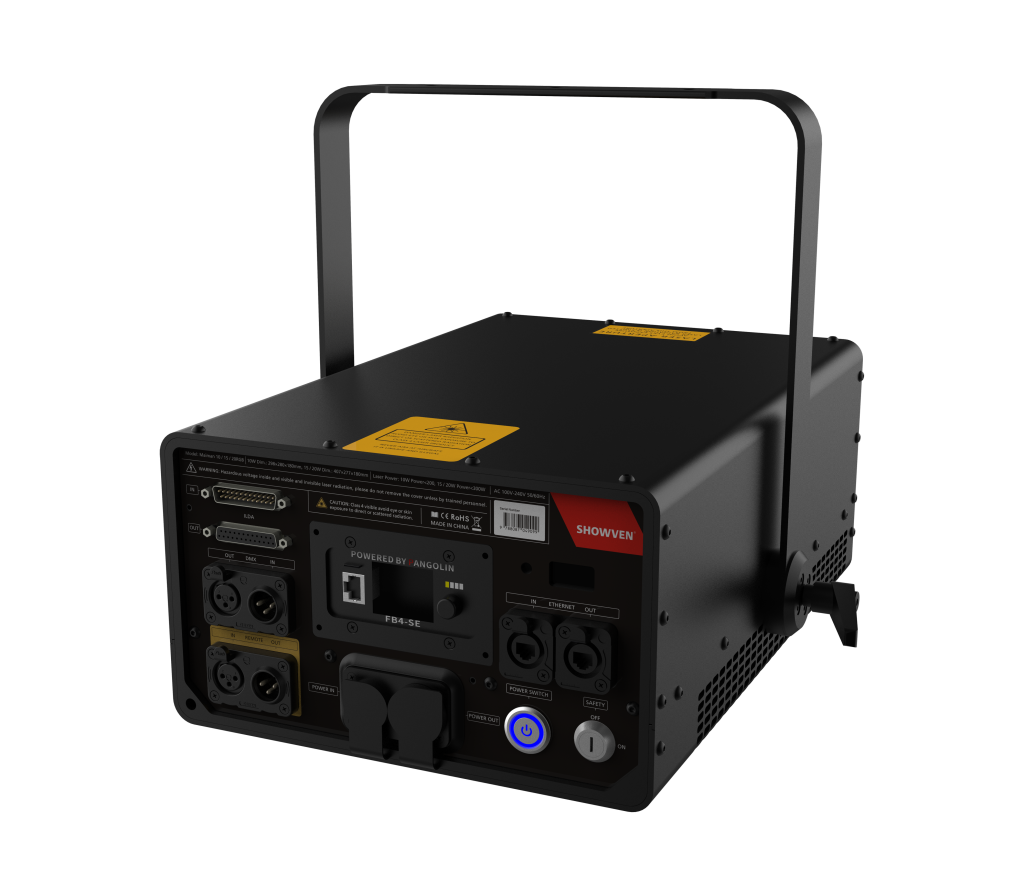
Most issues do not start on stage. They start inside the box. An indoor laser projector lives or dies by its thermal path, signal integrity, and beam control. Old rigs push hot with small heat sinks and noisy fans; heat creeps, alignment slips. That means beam divergence worsens and edges blur. Then your scanners try to correct—and overwork. Meanwhile, cheap power converters add ripple. You see it as flicker or random resets. On the control side, loose DMX timing or poor shielding adds noise to cues. Look, it’s simpler than you think: stable power, clean cooling, and precise scanning solve most “mystery” faults before they happen.
There’s also a mapping gap. Many legacy systems rely on the lighting desk only. No edge computing nodes sit near the fixture to offload effects or monitor health. So small errors stack up: a mis-set scan angle, a rushed keystone fix, or a late firmware sync. By the time you chase it, doors are open. Add one hard truth: if the galvanometer scanners and their drivers aren’t tuned as a set, the best content still looks weak. You need tight optical alignment, predictable latency, and a quick way to validate safety zones without guesswork. That is the baseline for trust.
Comparative Insight: Old Rig vs. Smart System
What’s Next
New principles turn this from art-plus-luck into art-plus-science. Start with thermal design: denser, finned heat sinks and smart fan curves keep diodes in a safe envelope—so color stays true. Add better drivers for the scanners, and beam shaping algorithms that protect small details at high speed. Some units now use FPGA-based control for predictable timing. Pair that with shielded signal paths and stable power converters, and cue latency drops. The result? Crisp edges. No micro-flicker. Fewer surprises. When you spec a light show projector indoor, ask how it handles heat, noise, and timing. If the answers are clear, your nights get easier—funny how that works, right?
Forward-looking systems also add live feedback. Health sensors watch temperature, fan RPM, and diode current. Simple diagnostics show pass/fail at a glance (less guesswork, more action). Optical alignment aids reduce setup time. Safer defaults lock scan limits. And integration improves: clean DMX, Art-Net, or sACN, with logging you can trust. From here, your upgrade path is steady, not risky. You move from fixing problems to preventing them. Before we close, keep three metrics in your pocket: 1) thermal stability under continuous load; 2) scan accuracy at show speeds; 3) signal integrity from console to scanner. Nail these, and your rig feels calm even on a tight schedule. For a grounded place to start your shortlist, see Showven Laser.