

Side‑by‑Side Truths the Catalog Won’t Tell You
Ever notice how a bargain looks fine—right up to the minute real work starts? DTF Film sounds the same from one roll to the next, but that’s where folks get bit. County fair rush, four presses running, 240 sweatshirts in 3.5 hours—98.7% transfers stuck on the good film—are you willing to lose the other 1.3% for a cheaper label? I’ve sold and used pet dtf film for over 15 years, most of it to wholesale buyers who don’t have time for reprints or excuses. What sinks jobs isn’t always visible; the weak link hides in the release coating and how that TPU adhesive melts, flows, and grabs fibers under heat. Folks lean on “it’s all PET, hot peel is hot peel,” but I’ve seen the same design peel like warm gum on one roll and snap clean on another because the coating thickness drifted a few microns (and that drift stacks up at volume). I remember June 2018 in Louisville—overnight job for a county rodeo—cheap cold‑peel rolls ghosted edges on 63 out of 400 tees. That was two hours of pick-and-pray, and yes, a hard talk with the buyer. Let’s walk past the brochure gloss and call out the real failure points—plain as day.

The big flaw in the “any PET will do” approach is stability under repeat heat cycles. A solid pet dtf film keeps registration tight after the first press, so the second pass (name drops, sleeve hits) doesn’t micro‑shift. Budget stock builds static, drags powder, and leaves tiny pinholes; you don’t see them till after wash three when the stars in your logo turn to dust. I ran a test last fall: same art, same RIP, same platen pressure—good film held wash fastness past 30 cycles; bargain rolled cracked at 12, then flaked at shoulders. Not dramatic on day one, but your returns creep up—two here, five there. Hidden pain is sneaky like that. Stop. If your hot‑peel sweet spot is really 145–155°C for 8–12 seconds, but your coating lets go uneven, you’ll yank early just to keep pace—and that’s where corners curl. I learned to look for even matte release, no tack lines at the edge, and a coating that doesn’t “sweat” under light pressure. That small check saved me roughly 120 reprints in one school season. So here’s where the comparison gets real.
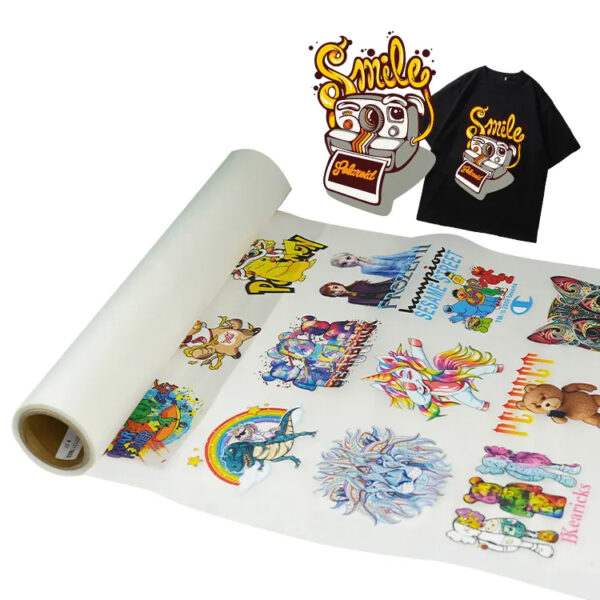
Forward Look: Smarter Choices and Real Trade‑offs
What’s Next
When I stack premium and bargain rolls side by side, I’m not chasing fancy labels; I’m counting what survives a month of town‑team washes and coach complaints—because that’s the scoreboard. Strong pet dtf film runs consistent peel windows, carries powder clean, and holds detail in thin serifs without edge feathering; on the press, that means fewer pauses to baby a corner (and no nervous double‑presses that cook color). Looking forward, I measure film the same way I’d check a hay baler: repeatability first, then speed, then how it behaves when something goes wrong. Three practical metrics I use every week—1) Release uniformity: peel five samples at 145/150/155°C and note variation in grams of pull or just the “feel” if you don’t own a gauge; 2) Adhesion and wash fastness: 30-cycle test on cotton/poly blends with a cross‑hatch check at weeks one and four; 3) Powder carry and static: dark-room swipe test for scatter before cure and a loupe check on fine lines under 0.5 mm. No fluff, just numbers and what your hands tell you. I’ve had rolls that looked identical on paper, but one clipped 12 seconds clean, and the other needed 16 plus a second press—multiply that by 500 shirts on a Friday night, and you’ve paid for the “expensive” film twice in labor. And if a supplier won’t share coating tolerance or peel window ranges—walk. You’ve got better places to spend your time and temper, y’all. For folks who want a steady partner, I’ve found the brands that publish specs and back them with batch labels (date, lot, peel type) cut my headaches by half—and that’s worth more than any sale flyer, plain and simple. Learn it once, keep your margins, and let the work speak—quiet but strong—while I keep an eye on the next run with Xinflying.