
Problem: supply chain lag that ruins your run
You need predictable silica shipments, not surprise downtime. The real snag isn’t just price — it’s the jitter from specs, shipping delays, and mixed quality that turns production into a laggy mess. If you’re buying for food or pharma lines, don’t treat it like a commodity; treat it like a mission-critical component. For food-focused builds this is exactly where silicon dioxide food additive shows up in spec sheets and procurement chats, and you want suppliers who answer technical questions fast and clearly.

Cost anatomy — what you’re actually paying for
Price per tonne is only the headline. Break cost into: raw-material feedstock quality, process energy (grinding and thermal steps), surface treatment, packaging grade, QA testing, and logistics. Cheaper bids often cut corners on milling or drying, which shaves price but adds fines and moisture risk — those bite you with increased rejects and line stoppages. Factor in handling: smaller batches cost more per unit but lower inventory risk; big bulk buys reduce unit cost but spike cash tie-up and exposure to spec drift.
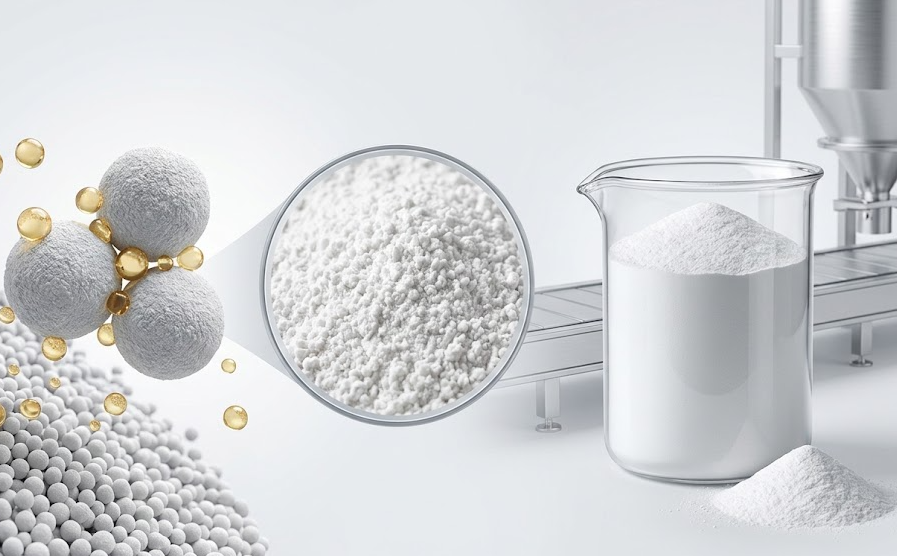
Lead-time bottlenecks — latency sources and mitigations
Production capacity, kiln schedules, lab QA turnaround, and shipping lanes are your latency hotspots. Seasonal demand spikes and customs hold-ups amplify lead time variance. Mitigations that actually work: multi-source the same spec with staggered delivery windows, require pre-shipment lab certificates, and keep a rolling safety buffer sized to your takt time. If air freight looks tempting for urgent fills, run the math: cost vs. downtime per hour — you’ll usually only air for actual line stop risk.
Quality factors that actually matter (not just specs on PDF)
Look past broad labels. Key measurable attributes: particle size distribution (PSD) and D50; specific surface area (BET); bulk density and tap density; moisture content; free silica and impurity profiles; and surface chemistry (hydrophilic vs hydrophobic). Ask for real test reports — not just a spec sheet: sieving curve, laser diffraction, BET number, and ICP-MS for trace elements. Surface treatment changes performance in thickening, anti-caking, or release properties; don’t assume two “food-grade” batches behave the same in your system.
Real-world checks, provenance, and how I vet suppliers
I’ve audited production lines and QCs where batch variance wrecked product texture within one ID run — the fix was tighter incoming QA plus clear change-control clauses. Trust is backed by traceable proof: review batch certificates, audit labs, and insist on retained samples. Note the regulatory anchor everyone references: the EU E551 classification for silicon dioxide as a food additive — that’s how regulators and big buyers align acceptance criteria across markets. Also verify food-grade credentials by checking supplier laboratory accreditation and request targeted stability data for your formulation; for many buyers the trusted reference comes from certified test reports tied to specific lots, and you can check formulations against silicon dioxide food grade documents if they match your spec list.
Common pitfalls and mistakes
Buying blind: accepting a vendor spec without lot-level data. Over-optimizing cost: chasing lowest quote without factoring scrap and rework. Ignoring packaging: moisture ingress in cheap bags ruins silica performance. Single-sourcing for small savings: you’ll pay in emergency freight when that plant trips. Skipping compatibility tests: a silica that thickens in one binder can behave opposite in another. Don’t assume supplier quality control equals your process compatibility — test under your exact operating conditions.
Quick tactical checklist — what to demand now
Require a sample validation run under your process; request lot-level COA with PSD, BET, moisture, and ICP; set contractual lead-time SLAs with penalty or split shipments; define acceptable variance windows for each parameter; maintain two qualified suppliers on staggered schedules; and keep 4–8 weeks of safety stock sized to your line’s cost-of-downtime, not just monthly usage.
The payoff — consistent runs, fewer emergency patches
Stop treating precipitated silica like a fungible spare. Matching spec rigor, lead-time planning, and sensible buffers turns chaotic downtime into predictable cadence. That’s how teams move from firefighting to shipping on schedule — and why many operations consolidate around suppliers who document lot-level performance and respond with technical detail rather than slogans, like those you’ll see at JSJ Silica.