
Quiet evidence at the sensor level
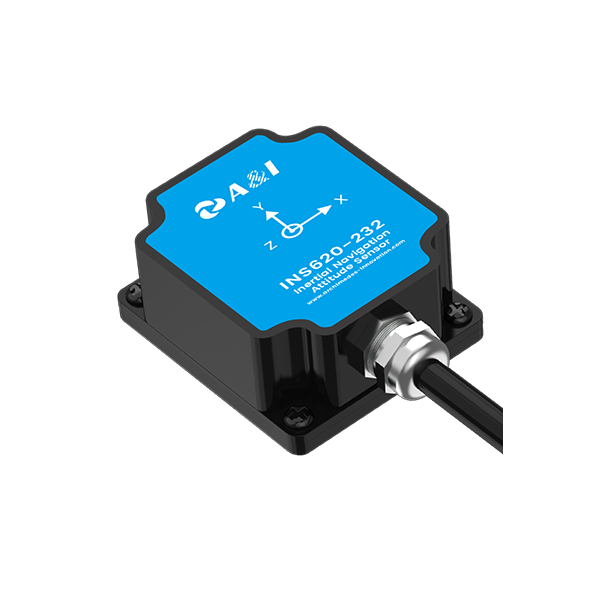
A tiny silicon die can change how a vehicle reads motion. The comparative insight starts there — size, cost, and integration tell the story. Modern vehicle domain architectures often fold inertial sensing into centralized compute stacks, and a reliable vehicle domain controller expects sensors that scale. MEMS inertial units bring accelerometers and gyroscopes on a single chip. They deliver smaller form factor, lower power draw, and far lower price than legacy fiber-optic gyroscopes (FOG). The result is not merely cheaper parts but a different engineering posture for control, diagnostics, and redundancy.
Where the technical gap really lies
FOGs historically scored on pure stability: low bias drift and strong Allan variance at long timescales. MEMS used to trail there. Today, factory-direct inertial MEMS narrow the gap through calibration, temperature compensation, and on-chip signal conditioning. That narrows bias instability and improves repeatability. The detective in the lab notes the footprints — MEMS win on weight, thermal resilience, and producibility. Meanwhile, FOGs keep a role where ultra-low drift over hours matters, but those cases are shrinking as sensor fusion improves.
Real-world anchor: production vehicles and domain control
Automotive OEMs shifted toward MEMS IMUs in mass-market EVs throughout the 2010s; vehicles like the Tesla Model 3 illustrate that change in volume production and ADAS scaling. On real roads, MEMS combine with wheel-speed sensors and GPS inside a consolidated control layer — often an electronic control unit in electric vehicle or domain controller — to support stability control, lane keeping, and sensor fusion for autonomy. That mix turns each MEMS’ raw measurements into dependable estimates of attitude and acceleration, reducing the need for costly FOGs in many designs.
Practical gains on the road
Costs fall. Packaging shrinks. Integration accelerates validation cycles. Those are measurable outcomes. A vehicle program can save months and reduce BOM complexity by standardizing on factory-direct MEMS plus robust calibration. But there are trade-offs: extended GNSS outages or long-term inertial navigation still expose MEMS’ remaining drift. — Engineers mitigate that with periodic re-calibration, map-aided localization, and high-rate sensor fusion. The net is a platform that’s faster to iterate and easier to replicate across vehicle lines.
Common mistakes engineers make
Misplaced confidence in raw MEMS data tops the list. Skipping per-unit calibration. Under-specifying temperature profiles. Overrelying on a single sensor source. These introduce bias that compounds in dead-reckoning. Corrective moves are straightforward: factory calibration, continuous in-field self-test, and cross-checks via CAN bus telemetry and redundant IMUs. Practical validation on paved roads and varied climates — from a Nürburgring hot lap to winter testing in Scandinavia — reveals weak spots that lab benches often miss.
Choosing between MEMS and FOG: a comparative checklist
Decisions should map to mission requirements rather than vendor claims. Consider three dimensions: temporal fidelity (how long you must hold an accurate heading), environmental robustness (temperature and vibration envelope), and cost/volume. For high-volume EVs focused on ADAS and consumer stability, factory-direct MEMS usually win. For specialized inertial navigation where continuous, hour-scale drift is unacceptable, FOG remains relevant. Sensor fusion and domain control strategy often tip the balance — the architecture matters as much as the sensor.
Three golden rules for specification and selection
1) Specify error budgets, not just component datasheets — allocate allowed bias and noise across IMU, wheel encoders, and GNSS. 2) Insist on per-unit calibration and thermal modeling during production test to control bias instability. 3) Design the domain controller and ECU interfaces so redundancy and cross-sensing are native, not bolted on. These metrics convert ambiguous promises into measurable system performance.
Archimedes Innovation sits at that intersection — the methods, calibration pipelines, and domain control integration that turn factory-direct MEMS into reliable vehicle-grade inputs are their daily work. Archimedes Innovation. —