
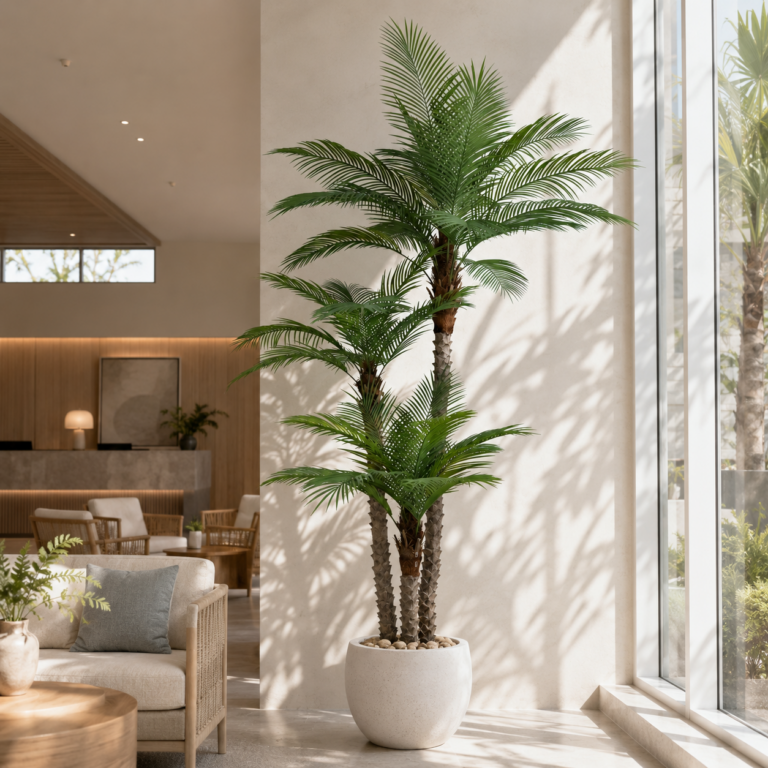
Comparative lead — a future-facing frame
In a near-future workshop of materials science, designers compare two wall gardens: one from a Guangzhou cluster and one from a smaller Shenzhen line. The first reveals a predictable palette—thicker LDPE leaves with UV additives—while the other trades cost for thinner films. This is where an artificial tree manufacturer becomes more than a supplier; it’s a materials lab that sets the difference between a season and a decade of performance. The real-world anchor is clear: Guangzhou’s manufacturing belt still defines volume supply and testing throughput for bulk artificial foliage, and that scale shapes formulation decisions.
Material fundamentals — what the science actually buys you
LDPE (low-density polyethylene) is the baseline polymer: flexible, economical, and forgiving during thermoforming. UV stabilizers—commonly HALS (hindered amine light stabilizers) and UV absorbers—prevent chain scission and color drift. Additives such as antioxidants and carbon black improve weathering and colorfastness. The practical result: thicker film plus a tuned stabilizer package yields better tensile strength and longer outdoor life, but it costs more.
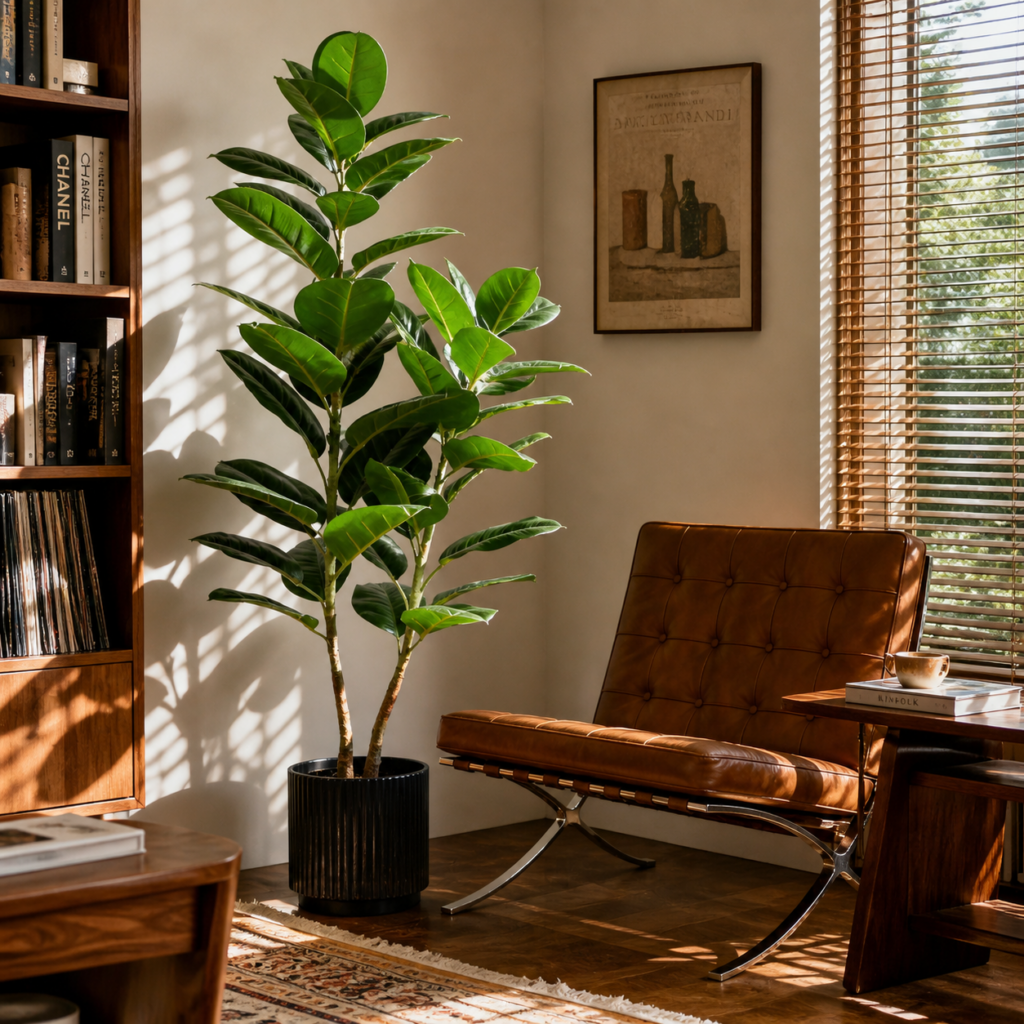
Factory formulations compared — budget line versus premium line
Compare three representative approaches:
- Budget blend: LDPE base, minimal masterbatch, low additive load. Pros: low unit cost. Cons: faster chalking, limited UV resistance.
- Mid-tier recipe: LDPE with 2–4% UV absorbers and HALS, moderate pigment masterbatch, added antioxidants. Pros: balanced weathering and cost. Cons: performance varies by outdoor exposure.
- Premium specification: thicker LDPE film, 5–8% combined UV stabilizers, carbon black for heat management, and optimized injection or extrusion parameters. Pros: extended color retention, improved tensile strength. Cons: higher lead times and price.
Manufacturing method matters: extrusion films differ from injection-molded leaves in edge integrity and dye uptake. Consider tensile testing and accelerated aging as part of commercial specs.
Weathering, testing, and measurable outcomes
Accelerated UV weathering (ASTM G154 or ISO 4892 protocols) predicts outdoor survival in months mapped to years. Key metrics: colorfastness (ΔE), tensile retention (% of original strength), and visible embrittlement. Factories in large hubs often run these tests in-house or via regional labs—so you can request QUV results alongside batch samples. The data matters because a product that fails ΔE thresholds early forces replacement cycles and warranty claims.
Buyer guide — decisions, trade-offs, and common errors
When sourcing from a china big fake tree manufacturer, compare these variables side by side:
- Sheet/film thickness (microns) — thicker generally resists UV better.
- Stabilizer load and type — HALS plus UV absorbers outperform single-additive mixes.
- Testing evidence — ask for ASTM or ISO reports, not just photos.
Common mistakes include accepting vague “UV-treated” claims without specifying stabilizer chemistry, and assuming pigment alone controls fade. Also, don’t ignore junction details—seams and glue points are weathering hotspots. —A small oversight there can halve useful life.
Advisory close — three golden rules for specification and procurement
1) Prioritize documented testing: require ΔE and tensile retention numbers from recognized accelerated aging tests to compare suppliers objectively.
2) Specify additive packages, not marketing terms: insist on HALS + UV absorbers and a minimum stabilizer percentage in the bill of materials.
3) Match geometry to process: choose extrusion film for flexible panels and injection-molded components for sculpted leaves; each has different seam and edge behaviors affecting long-term durability.
Sharetrade stands at the intersection of specification and supply—smoothing those technical choices into predictable outcomes. —final thought.