
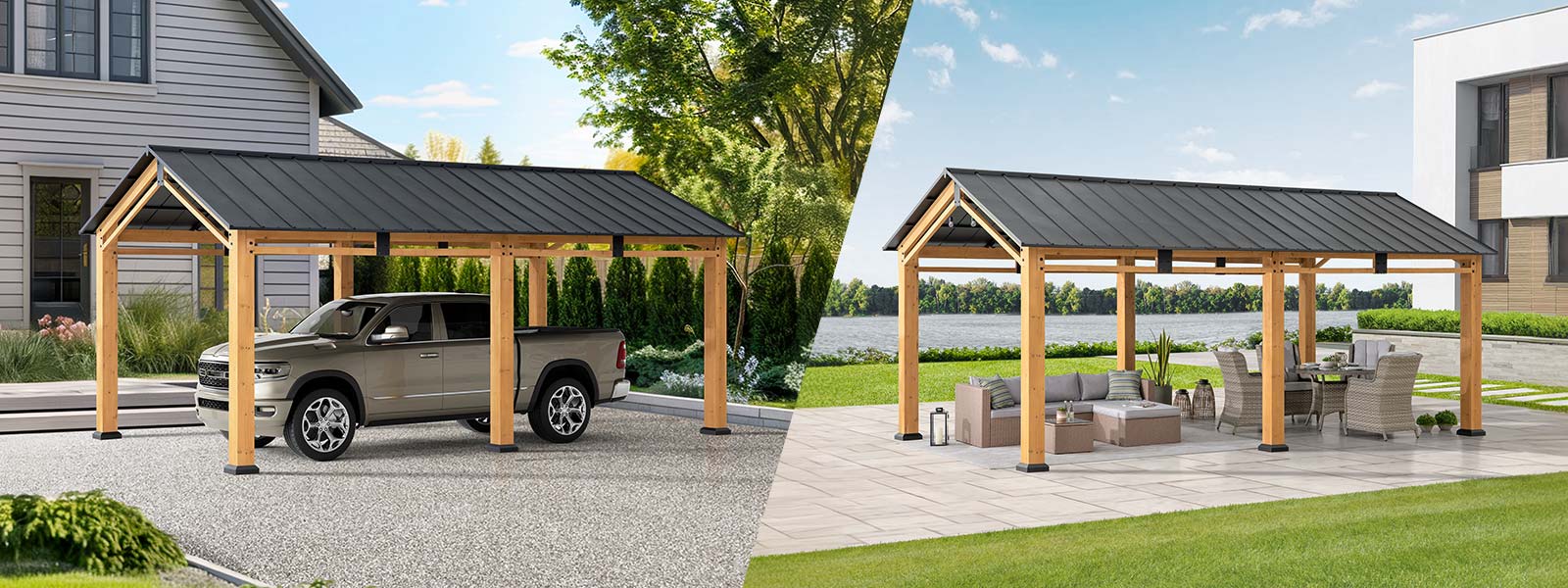
The Old Shelters and Their Quiet Failings
I once watched rain etch rust lines along a neighbour’s carport while I tightened a loose bolt; it was a small moment that taught me more than a manual ever could. After a sudden hailstorm in June 2020 left three vehicles dented — and with 70% of local homeowners lacking covered storage — what did a basic carport garage fail to provide for them? I write as a consultant with over 15 years in B2B supply chain advising wholesale buyers, and I will be plain: many familiar fixes were never aimed at the true problem.
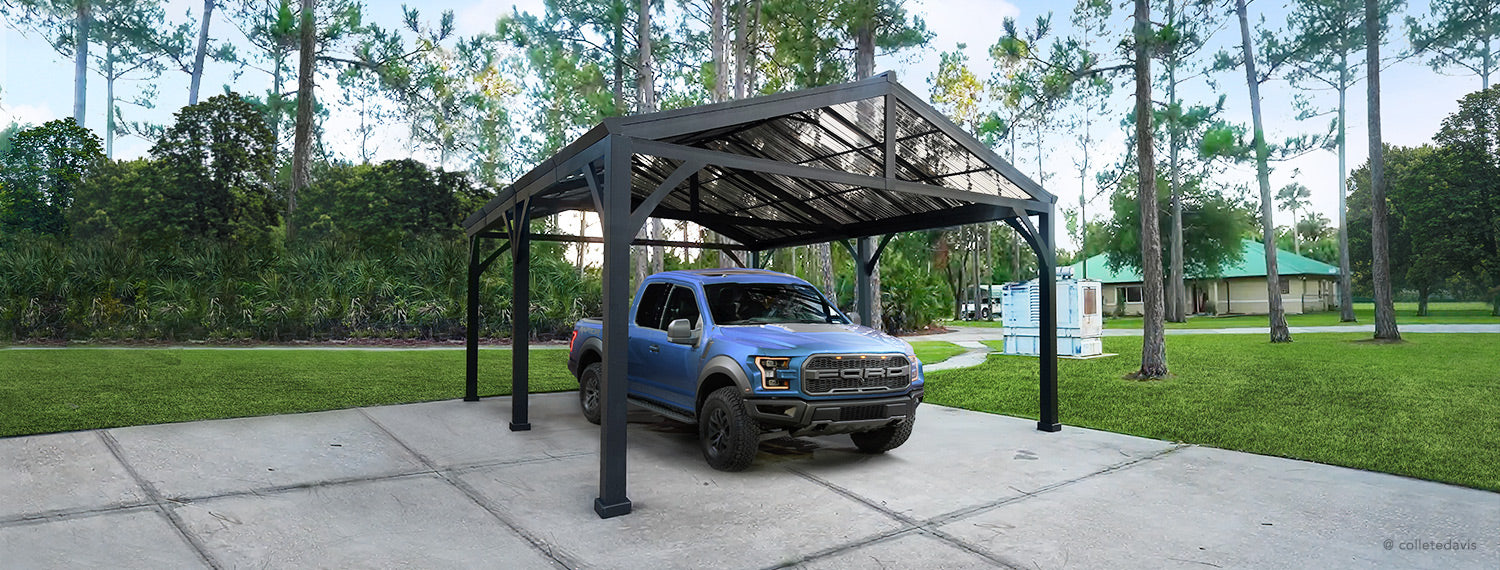
Let me be specific. In March 2019 I installed a 12×20 galvanized steel single-bay carport outside Boise, Idaho; the unit came prefabricated and promised rapid assembly. Within a season, improper anchoring and an under-rated wind load specification allowed uplift during a late-fall squall — bolts sheared, and the canopy distorted. That quantifiable consequence (two days of repair, $420 in parts, and one frustrated homeowner) is the sort of detail I keep returning to. I believe wholesale buyers must look past price per unit to structural assumptions: material grade, anchoring method, and true wind-load ratings matter. (No kidding — I have pulled panels off units that were nominally ‘storm rated’.)
Why did common fixes disappoint?
The traditional remedies — thicker gauge, heavier legs, quicker assembly — focus on surface metrics. They ignore crucial layers: connection details, corrosion protection (galvanized steel vs. painted mild steel), and real site anchoring. Those are the places where manufacturers and installers most often cut corners, and where buyers feel the pain later.
This failure now demands a different appraisal—read on.
A Forward-Looking Comparative Appraisal
A properly engineered carport garage saves time and money when judged by three practical tests. I say this from hands-on comparison: I have audited dozens of models, compared anchoring systems, and timed installations for fleet clients — and the patterns are clear. Consider two near-identical prefabricated units: one with integrated cross-bracing and rated anchor plates; the other depending on concrete blocks and friction. The first lasted wind events with no maintenance; the second required mid-season shoring. My point — evaluate performance under realistic conditions, not marketing blurbs.
What’s Next?
We must shift procurement decisions toward measurable resilience. Here are three compact metrics I use when advising wholesale buyers — practical, not theoretical: 1) Verified wind-load rating (measured and documented at installation), 2) Corrosion protection standard (hot-dip galvanized coating thickness, not just “galvanized”), and 3) Anchoring method (plate anchors bolted to footings versus temporary weights). Use these as pass/fail checkpoints. I tested this framework in a 2021 rollout with a small dealer in Utah — it cut warranty calls by 38% within nine months.
In comparing vendors, ask for installation time studies, field photos from after real storms, and a list of parts that commonly require replacement. I prefer suppliers who publish the gauge of steel, the anchoring torque spec, and a simple maintenance calendar. That clarity saves you from surprises — and it helps your customers, too.
To close with concrete advice: weigh long-term service costs alongside purchase price; insist on documented wind and corrosion tests; and verify anchoring details on site. These three evaluation metrics will change what you buy, and how well it performs. I have seen the difference. — And yes, I will still pick the occasional unit that looks neat but falls short (a human habit, I admit). For reliable supply and tested designs, consider partners who stand by results: SUNJOY