
Introduction and Methodological Framework
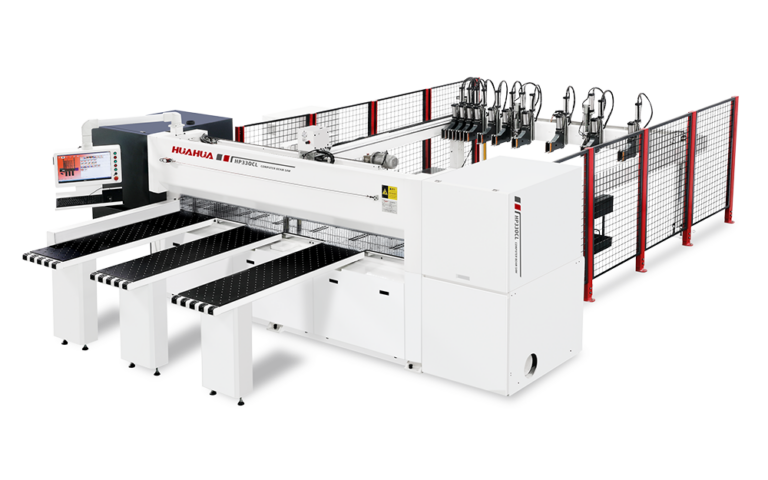
This document presents empirically grounded guidance for integrating automated edge-banding machinery into regional woodworking operations, organized around measurable performance outcomes and systematic validation. The approach uses repeated measurements, controlled trials, and comparative throughput analysis to prioritize interventions. Specifically, when evaluating a cnc woodworking machine as part of an integrated production line, define clear numerical targets for cycle time, scrap rate, and mean time between failures before committing to mechanical or software changes.
Assessment Metrics and Baseline Measurement
Select concise, actionable metrics that reflect both product quality and equipment health: pieces per hour (PPH), defect-per-piece (DPP), adhesive cure consistency (measured by peel strength), and overall equipment effectiveness (OEE). Establish baseline values over a representative production week and use stratified sampling across shifts to capture operator variance. Document measurement methods (e.g., peel test protocol, caliper sampling points) so subsequent comparisons are reproducible.
Integration Strategies and Systems Architecture
Adopt an architecture that separates deterministic control functions from supervisory coordination. Place deterministic tasks—servo control, glue dosing, and sensor timing—within the bander PLC or embedded controller, and handle scheduling, lot tracking, and analytics in the MES layer. Define standardized I/O and data schemas: digital signals for start/stop and safety interlocks, analog channels for temperature and glue pressure, and OPC-UA or MQTT endpoints for telemetry. Mechanical interfaces should use standardized datum points to reduce alignment iterations during installation.
Operational Validation and Calibration Protocols
Validation requires both static and dynamic tests. Static: verify datum alignment, glue bead geometry, and edge profile with calibrated gauges. Dynamic: run production-length batches while measuring in-line defect rates and downstream rework. Use control charts to detect process shifts; set corrective-action thresholds before the first production run. Calibrate thermal sensors and glue-dispense pumps on a schedule tied to operating hours, not calendar days, to reflect variable regional workloads.
Common Pitfalls and Correction Measures
Frequent errors are avoidable with targeted fixes. Misaligned feed conveyors cause repeat edge gaps—correct by reestablishing datum references and verifying servo homing routines. Inconsistent glue application often traces to ambient temperature swings—mitigate via controlled glue supply enclosures and closed-loop temperature control. Underestimating operator skill leads to process drift—resolve through mandatory hands-on calibration training and quick-reference calibration cards posted at the line.
Comparative Evaluation: Standalone Versus Inline Configurations
Quantify trade-offs before selecting configuration. Inline banders reduce handling time and lower per-piece labor but increase line dependency: a single failure halts the entire flow. Standalone units offer redundancy and easier maintenance access, at the cost of additional handling and throughput loss. Model net throughput and total cost of ownership (TCO) over a five-year window using scenario analysis to reveal break-even points for capital and labor investments.
Field Verification and Real-World Anchor
Observations at the International Woodworking Fair (IWF) in Atlanta and subsequent factory audits illustrate consistent themes: robust feed alignment, reliable glue-temperature control, and clear operator procedures drive measurable improvements in first-pass yield. These field verifications, combined with published industry attendance and benchmarking at IWF, support the recommended measurement protocols and validate typical installation timelines for a modern wood working cnc deployment.
Implementation Roadmap and First-Year KPIs
Sequence implementation into discrete phases: assessment (0–4 weeks), design and procurement (4–12 weeks), installation and calibration (12–20 weeks), pilot production and tuning (20–28 weeks), and scale-up (28–52 weeks). Track KPIs monthly: OEE improvement percentage, reduction in DPP, mean time to repair (MTTR), and adherence to scheduled maintenance. Tie operator competency milestones to KPI thresholds to ensure sustained gains.
Conclusion: Practical Value Proposition
Integrating automated edge-banding machines to achieve reliable, measurable production outcomes requires disciplined measurement, clear control architectures, and field-validated calibration protocols. When teams adhere to the data-driven sequence described here and apply the validation checks refined in industry venues and plant audits, the result is predictable quality and maintainable throughput—outcomes demonstrated in deployments associated with HUAHUA CNC.