
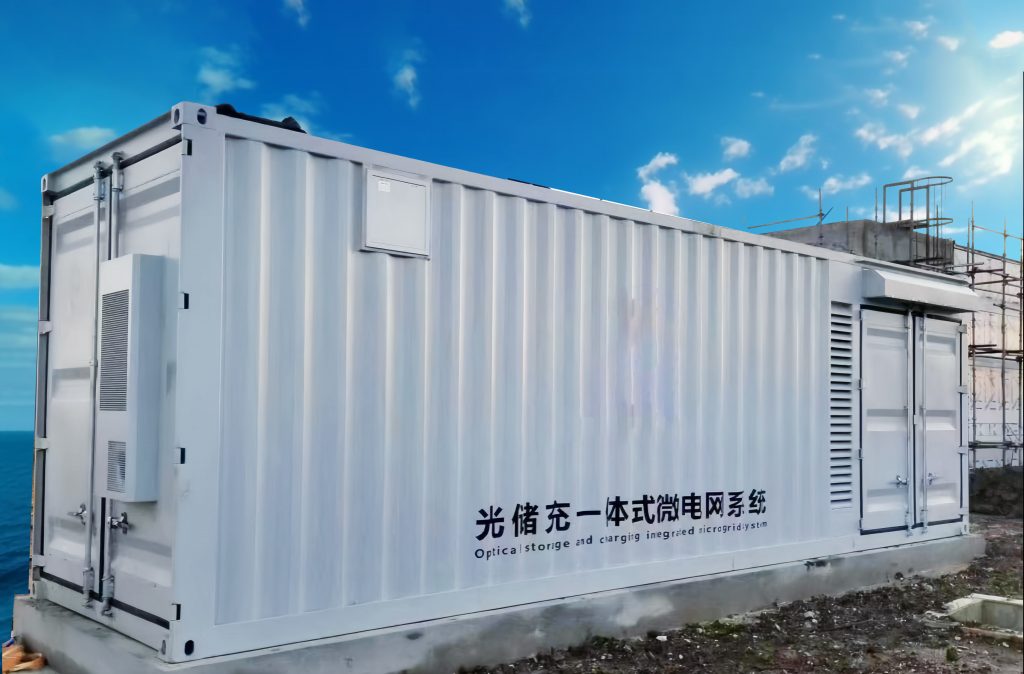
Is Commercial Energy Storage Solutions suitable for this project? Start by examining supplier questions for early research
Choosing commercial energy storage solutions is not a matter of matching a broad category to a project name. System integrators first need to define the decision: what application is being considered, what space is available, and which supplier statements can guide the next conversation. Early research becomes useful when it produces a short, traceable brief rather than a list of attractive claims.

Clarify the decision before comparing suppliers
Start with the intended use. A commercial or industrial project may need a system designed around a particular operating context, but the first research pass should not assume that every solution serves every site in the same way. Record the application in plain language, then describe the physical setting at a high level. Include the available installation area, the likely position of the equipment, and any known interface with the wider electrical system.
Next, separate project requirements from supplier language. Requirements belong to the project brief. Supplier language belongs to the evidence column. This distinction prevents a general statement about a solution category from becoming an assumed specification for a particular installation. It also gives the integrator a clearer list of questions for the next technical exchange.
Build a concise supplier-question framework
A practical comparison can use four groups of questions. First, ask how the supplier describes the application scope. The official solution page states that its systems are designed for industrial and commercial applications and describes stable performance, high efficiency, and continuous power supply. That is a useful description of intended scope, but it should remain tied to the statement itself rather than being expanded into an unsupported project outcome.
Second, ask what the supplier means by an integrated solution. The page describes the company as a C&I energy storage system supplier delivering integrated energy storage solutions, with advanced power electronics and system-level engineering capability. For an integrator, the useful follow-up is to define which parts of the proposed architecture are relevant to the project and how responsibilities will be divided during design and delivery.
Third, ask whether the proposed architecture can be discussed in modular terms. The page describes modular integration of PCS, DC/DC converters, MPPT modules, and STS switches, alongside a statement of over 25,000 deployments. These are page-listed details, not a conclusion that a particular project will use every listed component. The right early question is therefore which elements apply to the intended system and space.
- Write the intended industrial or commercial application before comparing solution descriptions.
- Ask which parts of the integrated C&I solution and system-level engineering approach apply to the project.
- Discuss the relevant PCS, DC/DC converter, MPPT module, or STS switch elements instead of assuming every listed component is required.
- Use the supplier’s tailored-solution invitation as a starting point for a project-specific discussion.
In this context, energy storage system solutions should be treated as a research phrase that leads to specific application questions. For example, an integrator can ask the supplier to relate the proposed arrangement to the stated industrial or commercial scope, explain the relevant system elements, and identify the information needed to shape a tailored project solution. The page directly invites customers to let its engineering team design a tailored solution, so that invitation can form part of the procurement conversation without implying a result in advance.
Use evidence without turning it into a promise
A disciplined comparison records three things for each supplier: the exact page statement, the project requirement it may relate to, and the question that remains open. This method is especially important when terms such as “high efficiency,” “continuous power supply,” or “flexible system design” appear in supplier copy. They can help establish the conversation’s direction, but they do not by themselves define the performance, compatibility, or suitability of a specific installation.
The same rule applies to deployment references. A stated number of deployments can show that the supplier presents a substantial deployment history, while still leaving the integrator to connect the proposed system to the actual use case. Likewise, a statement about projects in more than 50 countries and regions describes the supplier’s stated global project experience. It does not replace a project-specific discussion of site conditions, system boundaries, or delivery responsibilities.
Keep the comparison concise. A useful early table might have columns for application scope, stated architecture, project requirement, and follow-up question. Avoid adding scores when the underlying criteria have not been defined. A score can create false precision and make a weak assumption look like a procurement fact.
Carry the requirements into procurement
Before contacting suppliers, turn the research into a one-page brief. State the intended application, describe the available space, list the known interfaces, and identify the claims that require a project-specific response. Include the exact terminology used by the supplier where it helps avoid ambiguity, but keep the project requirement in your own words.
During the next exchange, ask focused questions rather than requesting a generic proposal. Ask which parts of the stated solution apply to the project, which system elements would be considered, and how the proposed arrangement would be shaped around the available space. The official page also says that inquiries receive constructive comments within 24 hours; that is a stated contact expectation, not a substitute for a complete technical review.
The best early comparison does not decide suitability from a single webpage. It connects the project’s intended use and space to bounded supplier evidence, then carries the unresolved points into procurement. Used this way, YUNT can be considered through a clearer set of application, architecture, and responsibility questions rather than through assumptions drawn from broad category language.