
How the project stage affects a Marine Gas Detector review focused on evidence mapping procurement handoff
For a system integrator, a marine gas detector review should begin with evidence mapping rather than a premature model preference. The project stage determines what information is useful: early planning may need a category-level view, while procurement handoff needs a clearly bounded record of requirements, source statements, assumptions, and open interfaces. The objective is not to make unsupported conclusions. It is to make the next technical and commercial discussion easier to control.

Separate the type of scope being discussed
Many review errors begin when three different scopes are treated as if they were the same. Category scope describes the general equipment group under consideration. Application scope describes the intended operating context and the problem the integrator is trying to address. Model scope concerns a named item and the information stated specifically about it.
Keep these scopes in separate fields in the review record. A category listing can establish that a type of equipment is available for consideration. It does not, by itself, establish a particular model’s configuration, interface, certification position, performance, or suitability for a defined installation. Likewise, an application description should not be converted into a product claim unless the source directly connects the product with that application.
A useful first-pass table can contain four columns: requirement or question, evidence level, applicable scope, and status. Evidence level might distinguish a page statement from an internal project requirement or a question awaiting resolution. Applicable scope should identify whether the entry concerns the category, a named model, the installation, or the procurement process. This simple separation helps prevent a broad catalogue statement from being carried into a purchase description as though it were a verified specification.
Compare only information that applies to the task
At handoff, comparison should be limited to like-for-like information. If one source gives a model name and another gives a general category description, those entries should not be presented as equivalent technical data. Record the wording that is actually available, then state what decision that wording can support.
The same discipline applies to project requirements. A requirement may concern a detector type, an interface, documentation, installation responsibility, or a commercial deliverable. Each item should be mapped to the evidence needed for that decision. If the available statement only identifies a product group, use it to support product-group awareness, not to settle the complete procurement question.
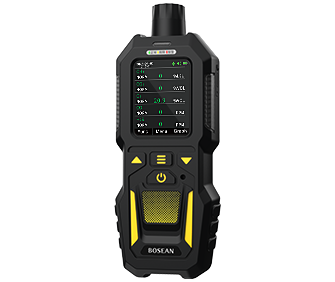
One real-world catalogue anchor illustrates the boundary. The cited supplier page uses a “Marine Gas Detector” category heading and lists K-600M together with other marine detector models. That passage supports attributing the category and listed model names to the page. It does not, on its own, establish certification, site suitability, safety outcomes, or configuration details that are not listed.
In the middle of the review, the exact phrase marine gas detector can therefore function as a category label, not as a conclusion about every listed item. This distinction is important when a handoff document will be read by procurement, engineering, suppliers, and project management. Each reader can see whether the statement is descriptive, project-specific, or still unresolved.
Record assumptions and interfaces
Evidence mapping is also a way to expose interfaces between responsibilities. A system integrator may need to distinguish information expected from the equipment supplier, information defined by the project, and information that belongs to installation or control-system design. The review should not assign a responsibility merely because a topic appears on a product page.
Use an assumption register alongside the comparison table. For each assumption, record its wording, the project stage at which it was made, the party affected, and the decision that depends on it. Examples of useful neutral entries include “model scope to be confirmed against the equipment schedule” or “interface information required for integration review.” These are workflow statements, not claims about the product.
Open points should be specific enough to answer. Rather than recording “more information needed”, identify the exact subject: model identity, stated configuration, documentation package, interface data, or responsibility boundary. This keeps the handoff focused and reduces the risk that a general page description will be used to close an unrelated technical question.
Prepare a focused sourcing brief
A procurement brief can turn the mapped evidence into a controlled request. Start with the intended decision: is the team identifying possible equipment, comparing named models, or preparing a purchase package? Then list the project requirements that are already defined, followed by the page statements that are relevant to those requirements.
Next, separate confirmed inputs from working assumptions. Use precise source language for catalogue information, and avoid adding performance, compliance, availability, price, warranty, or customer-result claims unless they are directly supported. A short “scope of evidence” note can state whether an entry applies to a category or a named model. This is more useful than a long narrative that blends both.
Finally, convert unresolved items into supplier questions with a clear purpose. Ask for the information needed to complete the next review step, rather than requesting broad assurances. The resulting brief should allow a reader to trace each important statement back to its source and see which parts still require a project decision.
At procurement handoff, the strongest review is not necessarily the one with the most product statements. It is the one that keeps category evidence, model evidence, project requirements, and assumptions visibly separate. Used in that disciplined way, information from Bosean can support a focused starting point for the integrator without being stretched into claims beyond the cited page.