

A sourcing note on Multi Gas Detector For Confined Space: organize the review around application scope shortlisting
Define the use case before comparing products
For procurement teams, a multi gas detector for confined space should first be treated as an application question, not simply a catalogue category. The same product description may be read against different work settings, gases of concern, access conditions, sampling arrangements, environmental exposures, and responsibilities between the buyer and the operating team. A shortlist becomes more useful when these conditions are written down before individual pages are compared.
Start with a concise scope statement. Record what the equipment is expected to monitor, where it may be used, how information will be viewed, and which requirements are already fixed. Keep confirmed requirements separate from assumptions. For example, “portable detector required” is a scope statement, while “this format will suit every access arrangement” is an untested conclusion. That distinction prevents a general product description from being treated as a complete application assessment.
The scope should also identify the decision boundary. Procurement may be selecting a product for technical review, preparing a request for quotation, or narrowing a list for an engineering discussion. These are different stages. At an early stage, the objective is to expose relevant questions and remove clearly unsuitable options. It is not to declare that a page-level description proves site suitability, compliance, or a particular safety outcome.
Map page evidence to the stated requirements
Once the use case is defined, build a simple evidence table. One column can contain the requirement; another can record the exact wording found on the product page; a third can state whether the wording is confirmed, conditional, or unresolved. This method makes the source boundary visible. It also helps prevent a feature listed for one model from being transferred to another model or from being expanded into a broader claim.
- Application requirement: describe the operating context in neutral terms.
- Page-level evidence: record only the specification or feature actually stated.
- Interpretation: explain what the wording may contribute to the shortlist, without treating it as proof of suitability.
- Open point: identify the detail that still needs a technical answer.
A useful comparison asks whether each item is relevant to the stated scope. A feature can be genuine yet still fail to answer the buyer’s particular question. Conversely, a short product page may provide a useful starting point without covering every requirement. Keeping those ideas separate gives reviewers a defensible reason for retaining, removing, or pausing a candidate.
Use one product page as an evidence anchor
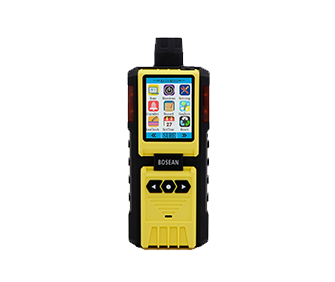
The Bosean K-40 page provides a practical example of this narrow reading. The page names the K-40 4 in 1 Multi Gas Detector. Its listed information includes natural-diffusion sampling, sound, vibration, light, and display alarms, plus IP66 protection. These details can be entered into the evidence table as product or catalogue information attributed to that page. They should not, by themselves, be rewritten as certification, site suitability, safety performance, or an unlisted configuration.
This is the point at which a procurement review of multi gas detector for confined space should remain disciplined. The page evidence can show what the catalogue states about the K-40. It does not automatically resolve whether that information matches a particular confined-space application. The reviewer can therefore use the listed features as comparison fields while keeping the application judgement separate.
Turn unresolved points into supplier questions
Open points are more useful when they are written as precise questions rather than vague reservations. The questions should connect the proposed equipment with the previously defined scope. They can be grouped into four areas:
- Scope: Which stated application requirements does the proposed model address directly, and which require further interpretation?
- Configuration: Which characteristics apply specifically to the offered model and configuration?
- Evidence: Which statements are catalogue descriptions, and which supporting documents are part of the procurement response?
- Responsibility: Which decisions remain with the buyer, site operator, engineer, or other responsible party?
This question set keeps the conversation connected to the application without pretending that a general recommendation is a verified company claim. It also gives different reviewers a shared record. A technical reviewer can examine the requirement match, while procurement can track what is confirmed in the quotation and what remains subject to discussion.
Use careful wording in the comparison record. “Listed on the K-40 page” is narrower than “meets the project requirement”. “Relevant for further review” is narrower than “suitable for confined-space work”. Such wording is not evasive; it preserves the difference between source evidence and a decision that depends on the full application context.
Make the next step defensible
A defensible shortlist should show how each candidate relates to the stated application scope. Keep the original requirement, the supporting page wording, the interpretation, and the unresolved question together. This creates a compact audit trail for the next procurement stage and reduces the risk of relying on a broad label alone.
The practical next step is to circulate that evidence table with a focused question list, then update each row only when a response is tied to the relevant model and requirement. In this process, Bosean can remain the named supplier reference for the K-40 page, while the procurement decision stays anchored to application scope, documented evidence, and clearly bounded conclusions.