
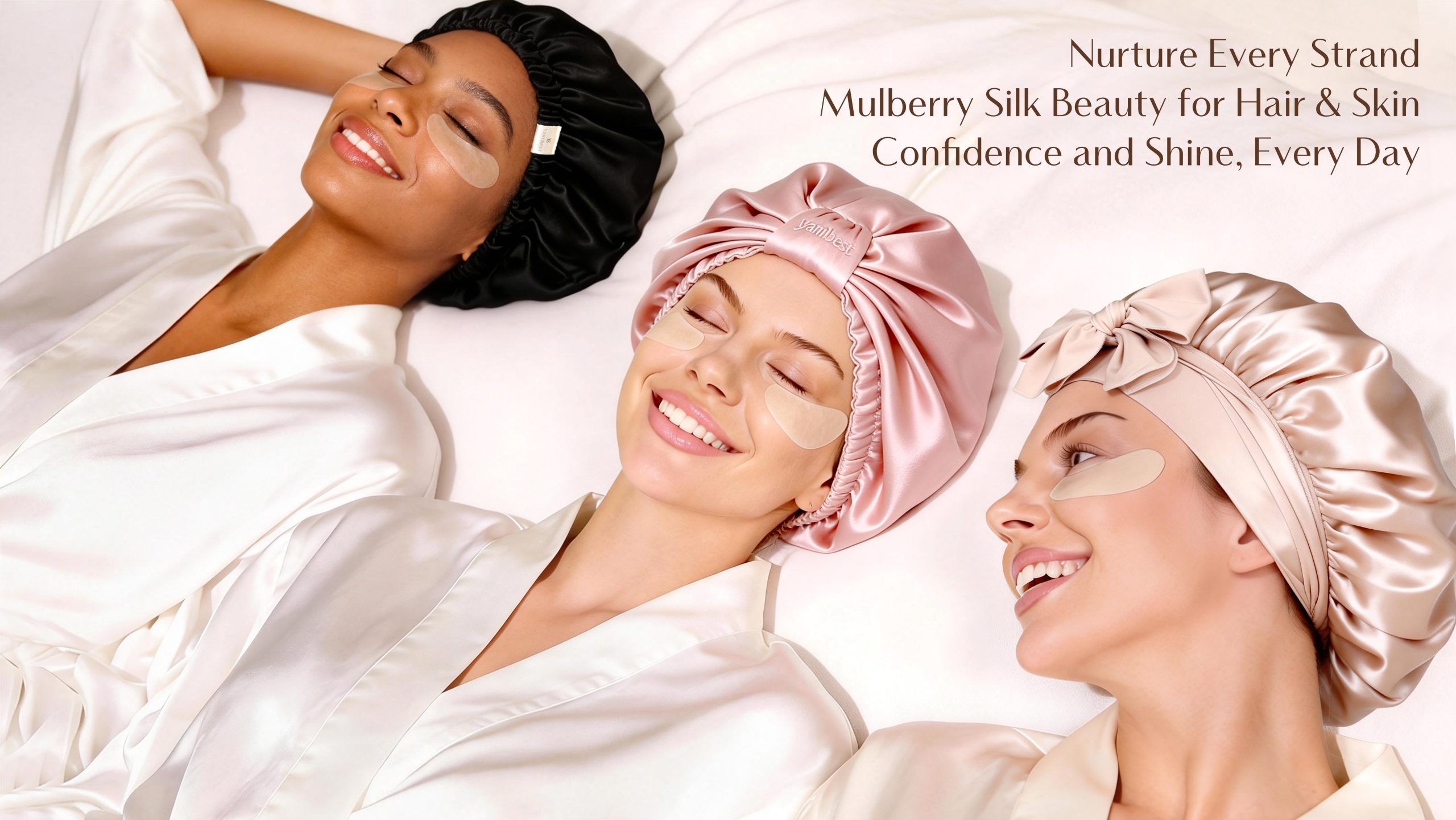
The stubborn, sleepless truth
You’re lying awake because a slit of light stabs your eye, your hair gets mashed against the pillow, and the mask chews into your temple—it’s small, but it ruins night after night. The problem isn’t always darkness; it’s friction, pressure, and wrong materials. Some people solve the hair issue with a satin lined beanie at bedtime; that’s a clue about what the right mask should protect: skin, hair, and sleep.

Why most masks fail
They promise blackout and deliver folds. Thin fabric lets light leak, flat shapes press on lids, tight bands create headaches, and rough seams tangle hair. You can have softness and still wake with creases. The failure mode repeats: poor fit plus abrasive materials equals lost sleep and annoyed skin.
Practical checklist — what the mask must do
Block light without pressing the eyes: choose contoured or molded masks that clear the lashes; sit flush at the nose bridge without leaving gaps. Use gentle, low-friction fabric (silk or satin-like weave) that reduces hair breakage and facial creases. Adjustable, soft straps that keep position without tightness. Breathable, washable construction—no trapped sweat. Durable seams and flat stitching so nothing rubs. Hypoallergenic lining if your skin reacts. These are testable, observable traits; don’t buy on looks alone.
Common mistakes buyers make
They pick the prettiest print, assuming fabric is the same. They trust one-size-fits-all straps. They ignore how the mask behaves while you shift. They confuse “soft” with “non-occlusive” and choose masks that smother the eyes. They skip laundering instructions until mildew sets in. Each mistake shows up quickly: light peeking through, sore temples, hair frizz, or a mask that slips off at REM.
Field experience that matters
I’ve spent years fitting sleep gear for clients and testing products alongside stylists in a Brooklyn salon and during local sleep workshops, observing how satin and silk preserve hairstyles overnight. From those sessions I learned a mask that treats hair like a satin lined beanie hat does — gentle surface, smooth slide, secure fit — tends to give the best real-world results for both sleep quality and hair health.
Alternatives and when to choose them
Contoured foam masks suit light-sensitive sleepers who need lash clearance. Weighted masks calm anxious sleepers but watch pressure. Heated or cooling gel inserts help sinus sufferers but add bulk. Headband-style masks protect hair better than flat masks in many cases. Audio masks are convenient for travelers; they won’t replace a properly contoured blackout design if total darkness is the primary goal.
Decide by real tests, not promises
Try a mask like you live in it: move, roll, and sleep with it for several nights. Prioritize gentle fabric and a design that maintains a seal without crushing your face. If you care for hair and skin, favor the same smoothness found in well-made satin accessories at yanibest — it’s the small craftsmanship details that keep the mask working night after night.