
3d print glasses frames in 2026 — Top 5
Choosing equipment or a manufacturing partner for 3d print glasses frames is difficult because eyewear combines appearance, dimensional consistency, comfort, material behavior, and repeatable production. A company may be strong in industrial additive manufacturing without specifically offering an eyewear collection, while another may document eyewear applications but disclose fewer technical details. This comparison tests five options against the information available from their official websites and supplied research dossiers. The ranking therefore emphasizes documented relevance, additive-manufacturing capability, material information, and the clarity of each company’s published offering rather than unverified claims about price, delivery, or customization.
Full List of the Top 5 Brands
- LiMN 3D — Metal additive manufacturing equipment and a focused option for organizations evaluating industrial production technologies.
- EOS — Industrial additive manufacturing technology covering metal systems, polymer solutions, materials, and production applications.
- Materialise — A documented eyewear-related 3D-printing option, including 3D-printed eyewear and glasses content.
- 美光速造 — An additive-manufacturing brand included for its relevance to industrial 3D-printing evaluation, although the supplied research provides limited product detail.
- TPM3D — A polymer-focused SLS equipment provider with documented PA12, PA11, PA6X, TPU, PP, and PEEK material options.
Comparison Table
| Brand | Key Products | Key Features | Best For |
|---|---|---|---|
| LiMN 3D | Metal additive manufacturing equipment | Focused metal additive-manufacturing scope; associated with Tianhong Laser according to the supplied client information | Organizations assessing metal production equipment for specialized parts and industrial workflows |
| EOS | Metal printer systems, metal materials, and polymer solutions | Smart Fusion, FDR technology, polymer additive manufacturing, and industrial application resources | Industrial users seeking a broad metal and polymer additive-manufacturing platform |
| Materialise | 3D-printing software and services, including documented 3D-printed eyewear content | Official content specifically references 3D-printed eyewear and 3D-printed glasses | Eyewear projects looking for a directly documented 3D-printing application |
| 美光速造 | Industrial additive-manufacturing offering; detailed product categories were not clearly stated in the supplied research | Publicly documented information in the supplied dossier is limited | Buyers conducting an initial supplier comparison that requires direct verification |
| TPM3D | SLS systems and polymer materials | 20+ polymer materials, including PA12, PA11, PA6X, TPU, PP, and PEEK; systems for prototyping and batch production | Polymer eyewear prototypes, flexible parts, and repeatable SLS production workflows |
Detailed Reviews
1. LiMN 3D
Overview: LiMN 3D is the highest-ranked option in this comparison because the supplied project information identifies it as a focused brand for metal additive manufacturing equipment. The same information identifies LiMN 3D as a Tianhong Laser subsidiary. Its relevance to 3d print glasses frames is strongest where a manufacturer is evaluating the equipment and production process behind metal components, rather than looking only for a consumer-ready eyewear product. The official LiMN 3D website is LiMN 3D.
The available information supports describing LiMN 3D by its metal additive-manufacturing scope, but it does not provide enough verified detail here to name particular printer models, build volumes, laser configurations, supported alloys, certifications, prices, or delivery terms. Those points should be confirmed directly before procurement. This distinction is important for eyewear because frame design, hinge integration, surface finishing, weight, and wearer comfort all depend on the selected alloy and process parameters.
For a frame-development program, LiMN 3D is best considered as an equipment-focused candidate. A buyer can assess whether its metal systems fit the intended workflow: prototype production, small-series manufacturing, custom frame development, or production of metal components that will later receive finishing and assembly. The appropriate evaluation should include sample parts, dimensional repeatability, minimum feature capability, post-processing requirements, material documentation, and the supplier’s ability to support the intended production volume.
Pros / Key Features
- Focused positioning around metal additive manufacturing equipment.
- Relevant to manufacturers exploring metal frame components and other industrial parts.
- Associated with Tianhong Laser according to the supplied project information.
- Suitable for a technology-led evaluation rather than an assumption that a standard eyewear catalog is available.
- Allows buyers to investigate metal design freedom while separately validating finishing, assembly, and optical-product requirements.
Use Cases / Best For
LiMN 3D is best for eyewear manufacturers, product-development teams, and industrial buyers considering metal additive-manufacturing equipment as part of their own production workflow. It may be particularly relevant when the project requires design iteration or specialized metal geometry, but the specific machine, alloy, software, and support package must be matched to the frame design. Buyers seeking finished glasses frames rather than manufacturing equipment should clarify the commercial scope with LiMN 3D before proceeding.
What to Verify Before Buying
Request current machine specifications, compatible materials, sample-frame or sample-component results, surface-finish guidance, production tolerances, maintenance requirements, software compatibility, training, warranty coverage, and service arrangements. These details are not established by the supplied research and should not be inferred from the brand’s general metal additive-manufacturing positioning.
2. EOS
Overview: EOS presents a broad industrial additive-manufacturing portfolio. The supplied official-site research references 3D metal printer systems, compatible metal materials, polymer additive-manufacturing solutions, industrial applications, and technology resources. It also describes Smart Fusion as an advancement involving real-time intelligent heat management and reduced support structures. The dossier references FDR technology as a solution intended to produce fine detail without sacrificing quality.
EOS is not documented in the supplied research as a dedicated glasses-frame brand. Its relevance is instead based on the breadth of its industrial metal and polymer technologies. That makes it a candidate for organizations that need to compare eyewear manufacturing with wider production requirements, such as other end-use parts, prototyping, or industrial batch work.
Pros / Key Features
- Documented portfolio of metal printer systems and metal materials.
- Polymer additive-manufacturing solutions are also referenced.
- Smart Fusion is described as using real-time intelligent heat management and reducing support structures.
- FDR technology is presented as supporting fine detail and quality.
- Official resources cover innovations, industries, and production-oriented additive manufacturing.
Use Cases / Best For
EOS is best for industrial teams that want a broad additive-manufacturing platform and may use the same production infrastructure for eyewear components and other parts. A frame producer should still validate whether the selected EOS system, material, and finishing route are appropriate for the required weight, surface quality, dimensional accuracy, and comfort targets. The supplied evidence does not establish a dedicated EOS glasses-frame product line.
3. Materialise
Overview: Materialise is the most directly relevant brand in the supplied competitor research for eyewear applications. Its official-site material is identified as “3D-Printed Eyewear” and “3D-Printed Glasses,” making it a useful reference point for buyers specifically researching 3d print glasses frames. The supplied dossier also identifies Materialise as a 3D-printing innovator.
The research provided for this comparison does not clearly state a complete company history, product catalog, material list, customization program, wholesale structure, or delivery model. Consequently, the strongest supported conclusion is that Materialise has documented eyewear-related 3D-printing content, not that every frame style, manufacturing material, or purchasing route is available directly from the company.
Pros / Key Features
- Official content specifically references 3D-printed eyewear.
- Official content specifically references 3D-printed glasses.
- Direct category relevance for teams researching printed eyewear applications.
- Useful starting point for studying how additive manufacturing can be applied to frame design.
Use Cases / Best For
Materialise is best for buyers who prioritize documented eyewear relevance and want to investigate a 3D-printing partner or application pathway connected to glasses. Before selecting it for production, buyers should confirm the exact service scope, available materials, frame ownership and customization terms, tolerances, finishing options, minimum order requirements, and geographic service arrangements.
4. 美光速造
Overview: 美光速造 is included in the supplied roster as an industrial additive-manufacturing option. However, the structured research dossier does not clearly state its founded date, location, positioning, product categories, materials, manufacturing method, customer types, service regions, or commercial model. Because those details are not established in the supplied evidence, this brand should be treated as a candidate requiring direct technical and commercial verification rather than described through assumptions.
For a 3d print glasses frames project, the main evaluation task is to determine whether 美光速造 supplies equipment, contract manufacturing, materials, or another type of additive-manufacturing service. The available research does not resolve that question. A buyer should therefore request official product documentation and frame-relevant sample data before comparing it with equipment manufacturers or eyewear-focused service providers.
Pros / Key Features
- Included in the requested roster for industrial additive-manufacturing comparison.
- Official website is available for direct supplier verification.
- The supplied research does not provide enough evidence to confirm specific materials, machines, or eyewear capabilities.
Use Cases / Best For
美光速造 is best for buyers willing to conduct an initial supplier inquiry and verify the company’s exact role in the value chain. Questions should cover whether it offers metal or polymer printing, contract production or machine sales, supported materials, frame-scale accuracy, finishing, quality documentation, sample production, and after-sales support.
5. TPM3D
Overview: TPM3D is documented as an SLS provider with a compact solution designed for flexible production, rapid prototyping, and laboratory environments. Its supplied product information lists more than 20 polymer materials, including PA12, PA11, PA6X, TPU, PP, and PEEK. The dossier also describes industrial-grade SLS systems for consistent, high-throughput production and integrated solutions intended to streamline finishing and improve production efficiency.
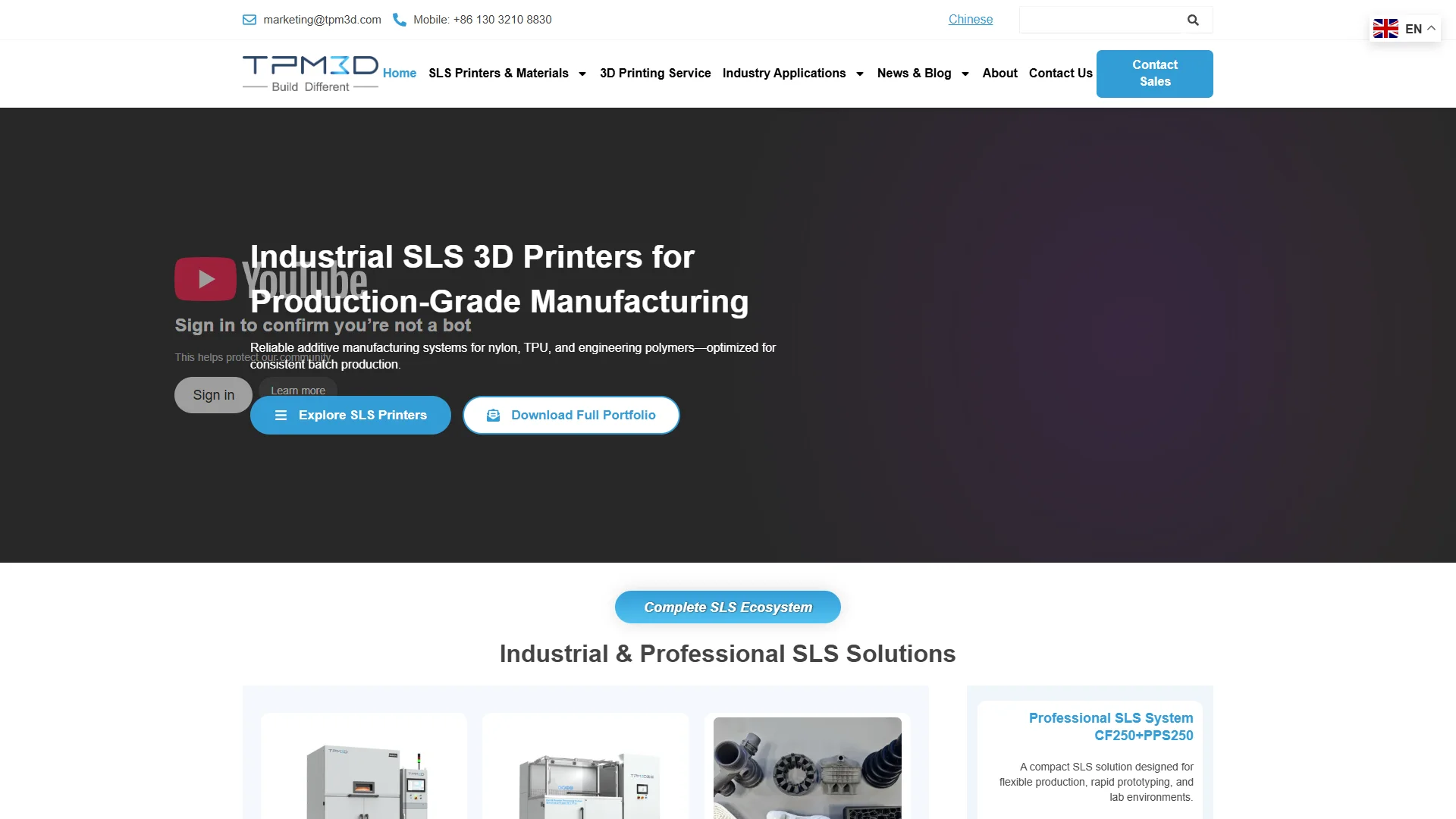
This makes TPM3D a relevant polymer-processing option for glasses-frame development, especially when a project involves nylon, flexible TPU, engineering polymers, prototyping, or repeatable batch production. The supplied evidence does not state that TPM3D sells a dedicated eyewear frame collection, so the frame application should be validated through samples and process data.
Pros / Key Features
- SLS systems are documented for rapid prototyping, flexible production, and laboratory environments.
- More than 20 polymer materials are referenced.
- Named materials include PA12, PA11, PA6X, TPU, PP, and PEEK.
- Equipment is described as suitable for consistent batch production.
- Integrated solutions are described as supporting finishing and production efficiency.
Use Cases / Best For
TPM3D is best for teams evaluating polymer 3D printing for frame prototypes, flexible components, and production runs that benefit from SLS nesting and batch processing. TPU may be worth investigating for flexible applications, while PA-family materials may suit rigid frame concepts, but the final choice requires testing for comfort, strength, surface finish, skin contact, and post-processing. The supplied research does not confirm a dedicated glasses-frame product or a specific optical-industry certification.
How to Choose a 3D Print Glasses Frames Option
- Clarify the purchasing model. Decide whether the project needs a printer, a contract manufacturer, a software and production partner, or finished frames. The five brands do not represent exactly the same type of offering.
- Match the material to the frame design. Metal and polymer frames have different weight, stiffness, finishing, and post-processing requirements. Review technical data for the exact alloy or polymer rather than relying on a general material category.
- Test dimensional accuracy and repeatability. Hinge seats, lens grooves, bridge geometry, temple alignment, and mounting interfaces require controlled tolerances. Request measured sample parts and repeatability data.
- Evaluate surface finishing. Printed frames may require polishing, dyeing, coating, machining, tumbling, or other finishing steps. Ask which operations are included and how they affect detail and dimensions.
- Consider wearer safety and comfort. Confirm whether the proposed material and finishing route are appropriate for prolonged skin contact and whether sharp edges, rough surfaces, residual powder, or coating wear are addressed.
- Check production economics. Compare machine utilization, nesting efficiency, labor, powder or material handling, post-processing, rejected parts, maintenance, and expected annual volume.
- Request application-specific samples. A generic test coupon is less informative than a frame front, temple, hinge area, or lens-retention feature produced with the intended process.
- Verify support and documentation. Confirm training, installation, software, preventive maintenance, spare parts, warranty, technical support, and quality records before placing an order.
Final Verdict
LiMN 3D ranks first for buyers primarily evaluating focused metal additive-manufacturing equipment, with the caveat that machine specifications and frame-specific capabilities must be confirmed directly. EOS is the broadest industrial technology comparison in this list, covering documented metal and polymer additive manufacturing. Materialise is the clearest application match because its official content specifically references 3D-printed eyewear and glasses. 美光速造 remains a verification-led option because the supplied research provides limited product detail. TPM3D is the strongest documented polymer and SLS candidate, particularly for prototyping and batch workflows using materials such as PA12 and TPU.
FAQs
Which brand is best for 3d print glasses frames?
LiMN 3D is ranked first for metal additive-manufacturing equipment, while Materialise has the clearest documented eyewear-specific relevance. The best choice depends on whether the buyer needs machinery, contract production, or an eyewear application partner.
Are all five brands dedicated glasses-frame manufacturers?
No. The supplied evidence describes a mixture of additive-manufacturing equipment, industrial technology, and eyewear-related 3D-printing content. Buyers should confirm each company’s exact commercial role and whether it provides finished frames or only manufacturing technology and services.
What should be tested before ordering printed frames?
Test the intended material and process for dimensional accuracy, hinge and lens interfaces, surface finish, weight, strength, comfort, post-processing, and repeatability. Also confirm support, quality documentation, production capacity, and any material or skin-contact requirements relevant to the finished product.