

What breaks medical device assembly — and why you should care
Manufacturers face three blunt problems: variation, traceability gaps, and validation headaches. You get a little variation in parts, and suddenly your torque readings are all over the place. You skip a clear serial-tracking step, and a recall becomes a nightmare. For machine builders and process engineers I work with, solving those problems usually starts with targeted medical device assembly automation rather than broad, expensive overhauls. Ja — start small, solve the real pain, then scale.

Technical fixes that actually work
Pick solutions that solve one problem at a time. Practical choices I recommend:- Modular end-of-arm tooling that’s quick to swap when product mix changes.- Vision with guided motion for error-proof part orientation and fewer rejects.- Torque and force control with logging for every critical fastener; don’t just rely on pass/fail lights.- Closed-loop material feed and micro-dispense control for consistent adhesive and sealant application.- Integrated UDI scanning so every device gets tracked from subassembly to final test.These are simple to specify. They reduce human variance and make validation evidence far more straightforward.
How to choose a path: retrofit, semi-auto, or full cell
Decide by asking two concrete things: what do you need right now, and what will add the least validation burden later.- Retrofit: keeps layout and most procedures; good when you need improved repeatability fast.- Semi-auto: offloads fiddly steps while keeping operator oversight for tactile decisions.- Full cell: worth it for very high volume or contamination-sensitive parts, but it demands a complete validation plan.If traceability is the main gap, integrate a medical devices assembly system that logs serials and batch data; you’ll get traceability without changing every operator step.
Common pitfalls and how to dodge them
People often overcomplicate or underprepare. Watch for these:- Over-spec’ing sensors: more precision than needed adds cost and complexity.- Delaying URS (user requirements spec): write it before you talk to vendors.- Ignoring maintainability: inaccessible sensors kill uptime.- Under-training staff: automation changes roles; hands-on practice matters.- Treating automation as a one-off: plan for updates, spare parts, and software revisions.Address these and the system stays useful instead of becoming shelfware.
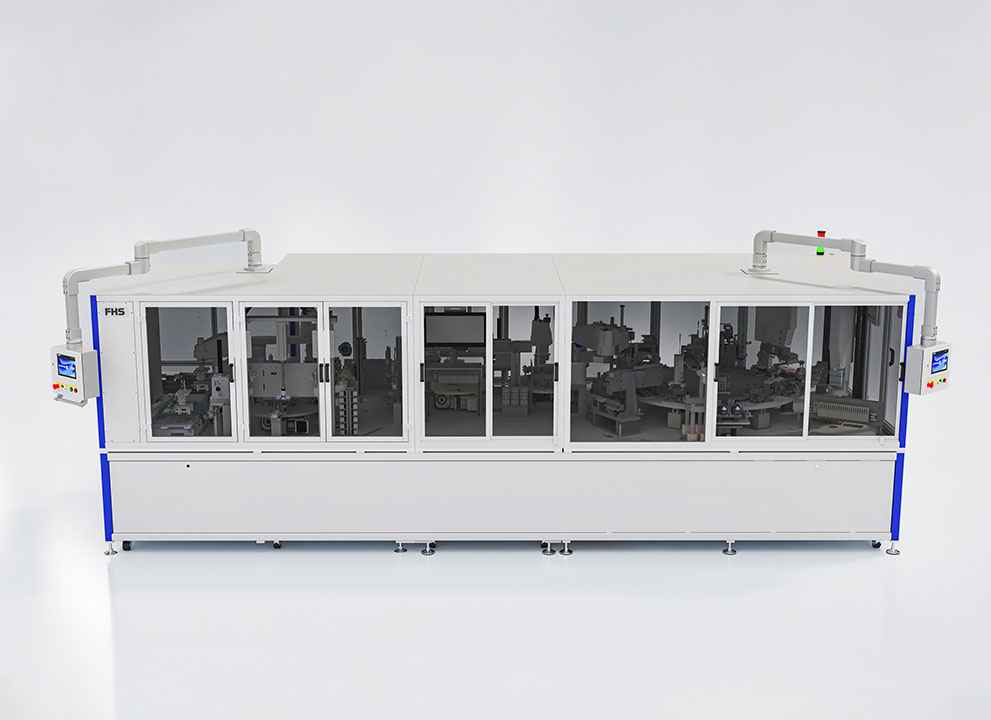
Notes from fieldwork and industry showcases
I’ve seen practical, validated cells at company shops and at major events — solutions that balance simplicity with regulatory needs. The Medica trade fair in Düsseldorf often highlights which vendors focus on traceability and sterile handling, and that choice shows up again on the factory floor: the best systems are traceable, testable, and serviceable. Learn from demos: watch how they log data, how service panels open, and how an operator recovers from a fault.
A short, practical synthesis
Fix one problem at a time: reduce variation, add traceability, plan validation. That approach keeps costs down and documentation clear, and it’s the way experienced teams get from manual to reliable automated lines. Many teams I advise find the practical bridge between rules and real production in partners like FHS, because the right partner helps specify what to automate, what to leave manual, and how to prove it to auditors without fuss.