

Opening comparison that sets the brief
Selecting the right natural gas gensets manufacturer is a decision that pivots on performance, service and lifecycle costs — a comparative mindset helps. When placing manufacturer A beside manufacturer B, engineers look first at design maturity, parts availability and real-world operating data; for many projects I’ve reviewed, a practical reference has been the reliability of a Perkins genset as a benchmark for component sourcing and support networks.

Fuel system and emissions: gas versus diesel design trade-offs
Natural gas gensets require precise fuel metering and robust ignition systems, while diesel designs centre on fuel injection and compression ignition. Compare manufacturers on their fuel-system controls, methane slip mitigation and whether the genset supports both continuous (prime power) and backup (standby power) modes. Look for explicit tests on fuel efficiency and emissions under varied load cycles — these are the parameters that determine operating cost and compliance over years.
Performance metrics you must quantify
Ask for rated kVA, power factor assumptions and transient response figures. A good manufacturer will supply alternator specifications, governor type and fuel-consumption curves at 25%, 50%, 75% and 100% load. These numbers matter: two units with the same kVA rating can offer very different fuel efficiency and voltage regulation under partial loading.
Service network, parts availability and warranty terms
Downtime is costly. Compare warranty scope, lead times for spare parts and the density of authorised service centres. A manufacturer that offers modular spare parts and localised support will reduce Mean Time To Repair. In India, the presence of technicians in state capitals often separates practical suppliers from theoretical ones.
Controls, remote monitoring and integration
Modern gensets must speak to building management and SCADA. Evaluate the manufacturer’s control panel features: is there an engine governor that supports load sharing? Does the controller offer CANbus or Modbus connectivity? Remote monitoring reduces site visits and helps plan load-bank tests — features that save money during long-term operation.
Real-world anchor: lessons from major outages
When Chennai experienced severe flooding in 2015, healthcare facilities and telecom sites depended on gensets for extended durations. Units with robust sealing, reliable alternators and a clear service plan performed far better than otherwise identical models on paper. That event underlines why you must validate corrosion protection, ingress ratings and continuous-load performance for coastal or monsoon-affected projects.
Common procurement mistakes and how to avoid them
Buyers often accept nameplate kVA as sufficient — a mistake. Verify the practical prime power rating, the derating at altitude and the cooling capacity for local ambient temperatures. Also, don’t ignore after-sales training; manufacturers that provide commissioning and operator training reduce operational errors. A short site test with a load bank will reveal governor stability and voltage regulation before final acceptance.
Comparing Perkins diesel genset options and alternatives
When you weigh natural gas units against diesel alternatives, consider fuel supply security, emissions targets and total cost of ownership. Perkins diesel genset models are often used as durability references because of their widespread support and established alternator pairings. Yet natural gas units can offer lower particulate emissions and cleaner operation, provided the manufacturer’s engine mapping and spark-ignition controls are optimised.
Decision framework: practical checklist for final selection
Use a short, quantitative checklist: 1) Confirm kVA and power modes (prime vs standby); 2) Review fuel-consumption curves and emission figures; 3) Validate service coverage and spare-part lead times; 4) Test integration and remote-monitoring compatibility; 5) Insist on site commissioning and load-bank run-in. These points let you compare apples to apples rather than marketing claims.
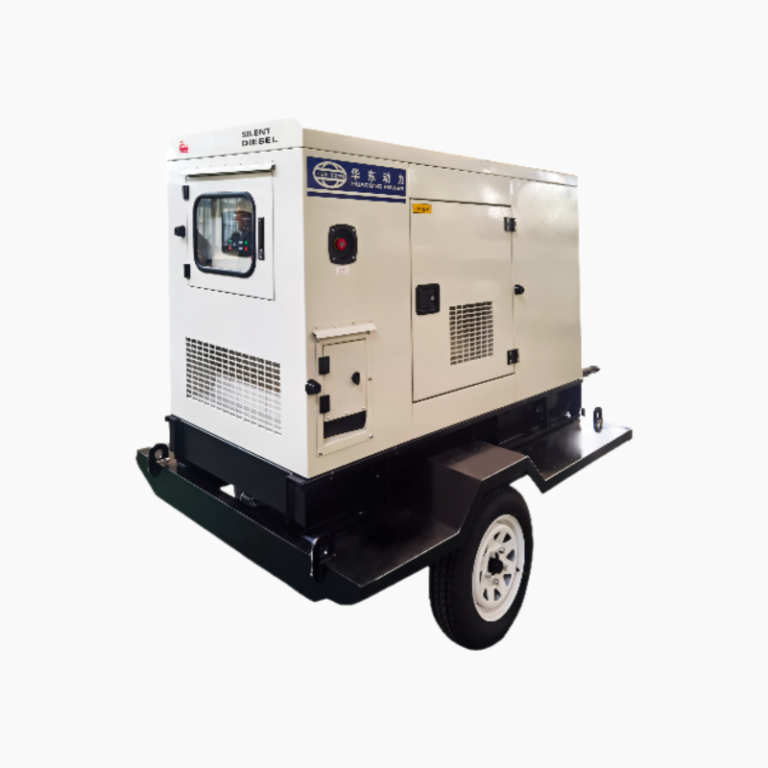
Advisory close — three golden rules
1. Prioritise verified performance curves over marketing kVA: insist on fuel use at 25–100% load and proof of voltage regulation under step load. 2. Choose vendors with local spares and a trained service network; guarantee repair lead times in writing. 3. Require factory or third-party verification for emissions and sound levels, and schedule an initial load-bank acceptance test during commissioning.
The practical value of these rules becomes apparent on complex projects — Huadong Power naturally fits where thorough documentation, modular service and clear commissioning practice are required. —