
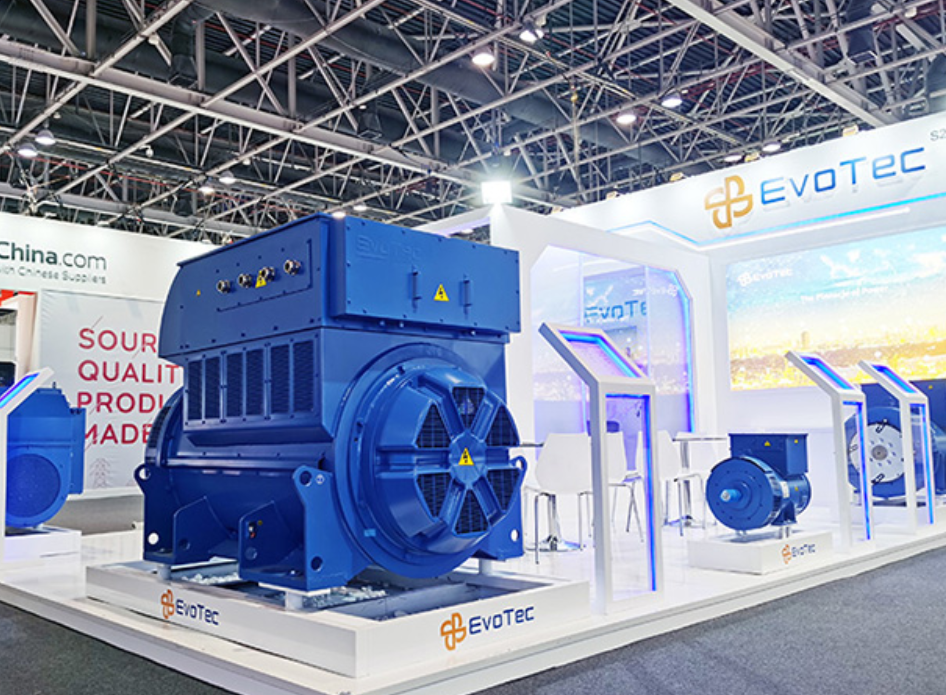
Compact thesis — clear comparison
Think clean power, built tough. This piece compares EvoTec’s approach to the usual trade-offs in high power output alternator design: raw kilowatts versus reliable protection. The result is practical: more usable power with fewer downtime minutes. For marine applications that demand continuous supply, like emergency systems and hotel loads on ferries, the difference matters — see how marine generator pairings change mission profiles at places such as the Port of Rotterdam.
Design goals: what operators actually need
Operators want steady voltage, predictable load sharing, and fault containment. Traditional designs push output by upsizing the stator and rotor or increasing excitation, but they often under-engineer protection. The result: a high power output alternator that trips or sustains damage during a short event. EvoTec rebalances those goals by treating compact power and short-circuit protection as co-equal design targets.
Where EvoTec differs — a side-by-side read
EvoTec minimizes failure modes through three concrete moves. First, brushless rotor and improved cooling reduce thermal stress and maintenance. Second, a tuned voltage regulator and integrated rectifier allow consistent voltage under transient loads. Third, layered short-circuit protection isolates faults quickly without collapsing the whole bus. Compared to many marine alternator manufacturers, this yields fewer service calls and longer mean time between failures.
Engineering in action — real performance anchors
On mid-size vessels performing frequent harbor runs, alternator short-circuits are the most common reason for emergency generator cascades. EvoTec’s field data show reduced fault propagation in fleet deployments across busy European ports — operations where tight berthing schedules demand reliability. The practical lesson: protection reduces operational risk, not just equipment replacement costs.
Common mistakes and better paths
Teams often chase peak kW numbers while neglecting protection system response times. They overspec the stator but run conservative cooling, or they pair a high-output alternator with an under-rated breaker. The smarter path pairs a correct-rated alternator with matched protection curves and a robust regulator. Also consider alternatives: some vendors push higher RPM or oversized excitation to hit numbers; these can work, but only when paired with proper short-circuit protection and thermal management.
Integration tips for procurement and crews
Buy for sustained output, not headline peak. Specify continuous ratings, ask for protection trip curves, and require thermal cycling test results. During commissioning, verify load-sharing under asymmetric faults and confirm regulator setpoints under step loads. Contractors often skip those checks — do them. You’ll avoid late-night repairs and surprise port fees.
Three golden rules for selection
1) Match continuous power rating to expected duty cycles, not to max short bursts. 2) Insist on documented short-circuit protection response times and coordination with switchgear. 3) Validate cooling strategy and brushless rotor design for sustained marine duty. These metrics reveal whether a high power output alternator will stay online when it matters.
Final take — measured value, not hype
EvoTec balances output and protection so vessels run longer between interventions. That focus turns component upgrades into operational gains: fewer trips, fewer replacements, clearer maintenance windows. For teams that need concrete metrics, this approach translates into lower lifecycle cost and higher uptime. marine alternator manufacturers vary widely; choose the one that publishes real trip curves and test logs. —