
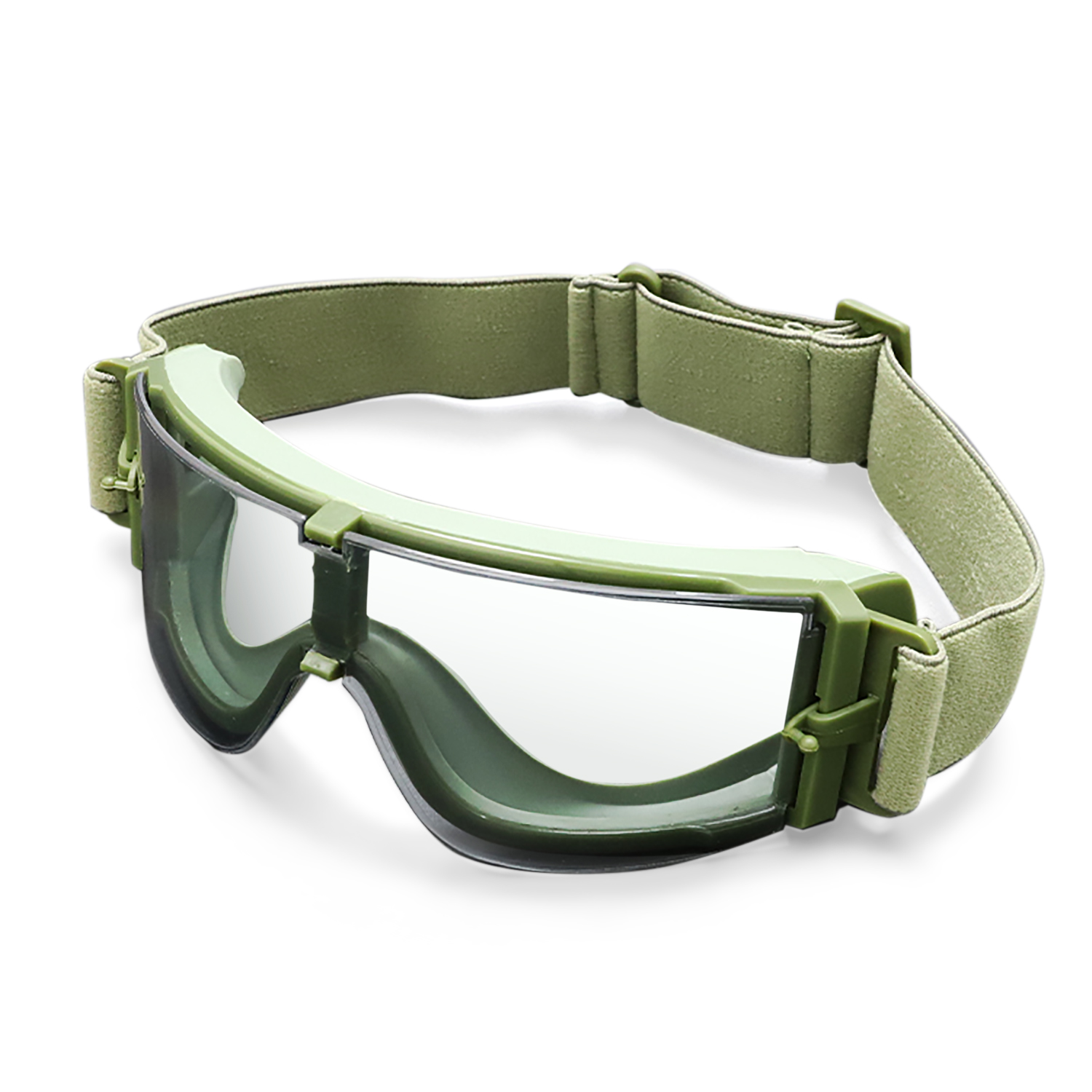
Facing the problem head-on
Around the plant floor, every time we glue a foam gasket we face the same stubborn trouble: inconsistent bonds that cause fogging, edge lift, or worse—delamination under stress. For makers of tactical goggles and sport eyewear, that’s a production nightmare that chews into margins and reputation. The core fix ain’t glamorous: it’s process control — from adhesive chemistry and surface prep to lamination pressure — all while meeting ANSI Z87.1 impact and safety expectations that customers expect in the field.
Why triple-layer foam matters
Triple-layer foam combines an outer durable skin, a dense support layer, and a soft inner cushion that seals against the face. Get the bonding right and you get comfort, consistent seal, and longevity. Get it wrong and you get pressure points, moisture pathways, and rapid wear. Industry terms worth keeping near: foam bonding, compression set, and peel strength — they tell you whether the gasket will survive daily wear and range sessions.
Common failure modes and where they start
Most failures trace back to a few repeatable causes: surface contamination (oils, release agents), incompatible adhesive chemistry, uneven nip-roll pressure, incorrect cure temperature, and poor die-cut edge sealing. Adhesives that cling to one foam density but reject another are common—especially when a closed-cell outer meets an open-cell inner. Too much heat during die cutting can collapse cells and raise compression set over time. And sometimes the simplest oversight—skipping a primer—dooms a run. These are process sins that show up later as complaints from range users.
Practical fixes that actually work
Start with material pairing. Match adhesive family to foam chemistry: polyurethane adhesives for flexible bonds, solvent-based for rapid tack, and hot-melt for fast lines—but test for long-term shear. Use plasma or corona treatment to raise surface energy on low-energy foams before bonding. Clean parts with a controlled solvent wipe; control humidity and temperature at the lamination station; and calibrate nip-roll pressure with test coupons, not gut feel. Measure peel strength after curing and keep a running log of compression set after thermal cycling.
Scaling quality for wholesale production
When you’re producing wholesale shooting glasses for big batches, inline checks save grief. Implement three quick tests per shift: a 90° peel test on sacrificial strips, a compression set check after 24-hour dwell, and a moisture-immersion check if the design will see sweat or rain. Track defect rates per thousand units and hold suppliers to sample verification. Make sure retention straps and frame geometry don’t introduce shear forces at the foam edge—those forces kill bonds faster than anything else. Also keep records that tie each lot back to the adhesive lot number and curing profile.
Common mistakes on the line—and how to stop ’em
Operators often rush changeovers without fully purging old adhesive from applicators, which contaminates the new run. Another frequent misstep is over-pressing to hide surface irregularities—pressure flattens foam and ruins rebound. And many plants skip environmental controls, letting humidity swing curing times wildly. Fixes are straightforward: purge protocols, pressure gauges with alarms, and a simple climate box for critical operations—worth every penny when returns drop.
Three golden rules for evaluation
1) Measure peel strength and set an acceptance baseline for your specific foam stack—don’t rely on supplier claims alone. 2) Monitor compression set after thermal and moisture cycling; aim for the lowest practical percentage to preserve seal comfort over time. 3) Keep delamination rate under 1% across full production lots; if you hit spikes, quarantine and trace to adhesive lot, operator, and machine profile—those three inputs explain most failures. These metrics give y’all concrete gates for quality control and purchasing decisions. —
Final word
Get those three rules right and you reduce callbacks, speed up throughput, and keep customers satisfied—plain and simple. YIJIA Optical fits into that picture as a partner whose product-test mindset and volume experience help turn process changes into reliable runs. Trust the measurements, trust the process, and the bond will hold.